The Story of the II2 Class: Ensuring Fair Competition for Athletes with More Complex Needs

In the world of sport for athletes with intellectual disabilities, no two journeys are the same. Some athletes face additional challenges beyond cognitive impairment – health conditions, sensory difficulties, or physical limitations – that can affect how they compete. Acknowledging this reality is what led to the development of the II2 class.

The Birth of the II2 class

II2 class is a competition class for athletes with an intellectual impairment and with significant other impairment. Studies have shown that people with intellectual impairments have, on average, 11 types of physical health conditions. This competition class was developed to level the playing field for athletes with an intellectual impairment, who might have other impairments or health/sensory issues. These may arise from specific chromosomal conditions, like Down syndrome, or from the unique ways an individual develops. Challenges can include cardiac problems, respiratory issues, differences in muscle tone or flexibility, and sensory difficulties such as vision or hearing impairments.

“II2 is a reminder that equity in sport is not about treating everyone the same, but about understanding difference. By recognising the additional challenges some athletes face, we create genuinely fair competition“, says Prof Jan Burns MBE.

For these athletes, competing in the II1 class that was designed for those with just intellectual disability can be unfair. The additional impairments can affect performance in ways that go beyond strategy, memory, or pacing. Athletes with these more complex functional needs require a competition environment where they can compete on a level playing field.

This is where II2 comes in. While it is not a Down syndrome class, many athletes with Down syndrome naturally fall into II2 because the syndrome usually brings associated physical or sensory impairments. But II2 is broader: it is for any athlete whose intellectual disability comes with additional significant challenges. By creating this class, athletes with diverse conditions – but similar functional limitations – can compete fairly together.

Research behind the II2 class

The journey to II2 began with research in 2012. The research was spearheaded by Professor Jan Burns MBE and completed with Dr Rosanna Gilderthorp, Dr Suzie Lemmey and Dr Lorena Tussis. They worked to develop a screening questionnaire to assess the health status of athletes and a process to evidence the performance limitations, to ensure the class would be evidence-based and fair.

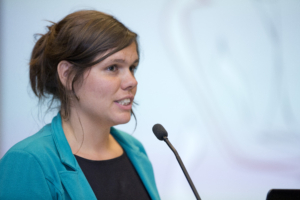
(L-R) Dr Rosanna Gilderthorp, Prof Jan Burns MBE and Dr Suzie Lemmey at GG2019

Being involved in the research and development of II2 for Virtus was a truly rewarding experience. It was a privilege to contribute to a framework designed to improve fairness and inclusiveness in sport, and to see that work come to life in practice!”, said Dr Lorena.

After years of careful development, II2 was officially introduced as a full competition class at the Brisbane 2019 Virtus Global Games. Today, there are over 660 athletes registered in the II2 class, all competing in an environment designed to reflect both their abilities and their challenges.

II2 is more than a category; it’s a recognition that fairness in sport requires nuance. It ensures that athletes with intellectual disabilities – whether or not they have conditions like Down syndrome – can compete with confidence, knowing they are on an even playing field with others facing similar challenges.

Athletes wishing to apply for athlete eligibility must contact the Virtus National Member Organisation within their country.

As Virtus celebrates its 40th anniversary, we want to extend our gratitude to the research team whose contributions towards developing this eligibility class have been instrumental in helping Virtus to create a fairer space for athletes with intellectual impairment and significant other impairments to compete on the elite stage.

Virtus at 40: Championing Excellence Since 1986
KU Leuven and Virtus Announce New Researh Collaboration to Advance Inclusive Para Sport

KU Leuven and Virtus, the International Sports Federation for athletes with an intellectual impairment, have announced a new collaboration aimed at strengthening the development of inclusive, equitable, and credible research to advance Para sport.

The partnership was launched during a special lecture and reception held on 11 March 2026, bringing together researchers, sports leaders, and members of the international sporting community. The event explored how scientific research and international sport governance can work together to advance opportunities for athletes with intellectual impairment.

Professor Debbie Van Biesen of KU Leuven presented the scientific foundations behind the collaboration, focusing on the importance of evidence-based classification in elite sport. Her research examines the complex relationship between cognition and sports performance, contributing to the development of fair and reliable classification systems for athletes with intellectual impairments. Beyond its impact on sport, this research also has important clinical and societal applications.

Talking about this new collaboration, Professor Debbie Van Biesen of KU Leuven says,

I am very happy that we can celebrate the renewed collaboration between KU Leuven and Virtus today. It is an important milestone on our shared journey towards more inclusion for athletes with an intellectual impairment at all levels of participation in sport. With the support of Virtus, we can continue the investigation into how cognition and performance are related, a line of research with direct impact for the athletes but also broader clinical and therapeutic applications.”

Nick Parr and Debbie Van Biesen addressing the seminar attendees at KU Leuven. Photo Credit: KU Leuven

The event was scheduled to coincide with the Winter Paralympic Games in Milan-Cortina, as the re-inclusion of events for athletes with an intellectual impairment into the Games remains a top priority for Virtus.

From the perspective of international sport governance, Nick Parr, Executive Director of Virtus, outlined the strategic significance of the partnership. He emphasised how collaboration with leading academic institutions such as KU Leuven strengthens the credibility and development of Para sport for athletes with intellectual impairments at the highest levels of competitions, but can also promote and encourage wider societal benefits and inclusion.

This collaboration represents an important step forward that classification systems are grounded in robust scientific evidence to enable new sports to be added to future Games programmes – including our target of inclusion in the 2030 Winter Games. By working closely with KU Leuven, we can continue to build a stronger, more inclusive future for athletes with intellectual impairments within the Paralympic movement and beyond,” Parr said.

While this marks a new formal phase of partnership, KU Leuven and Virtus have a long-standing history of working together on impactful research initiatives, including the IDEAL 1.0 and IDEAL 2.0 projects, which focused on improving inclusion and access to sport for individuals with intellectual impairments and autism.

Professor Van Biesen plays a key role within the Virtus ecosystem as well. Van Biesen is the manager of the Virtus Academy, a global hub for research, education, and training, launched in 2021 to support the development of elite sport for athletes with intellectual impairment. The Academy offers a wide range of eLearning courses, webinars, and toolkits, covering both general and sport-specific topics related to intellectual impairments and autism.

The partnership between KU Leuven and Virtus reflects a shared commitment to combining scientific research, sports policy, and international cooperation to support the continued growth and integrity of inclusive elite sport.

Together, both organisations aim to advance knowledge, strengthen classification systems, and promote greater opportunities for athletes with intellectual impairments to compete at the highest levels of international sport.

As we mark 40 years of Virtus, we honour Prof. Debbie Van Biesen for her exceptional contribution to the movement. Through her pioneering research and leadership of the Virtus Academy, she has helped shape the future of elite sport for athletes with an intellectual impairment.

 Virtus at 40: Championing Excellence since 1986

Records Fall as Virtus World Short Track Championships Conclude in Ourense

The 2026 Virtus World Short Track Championships came to an electrifying close in Ourense, Spain, with world records, dominant performances, and dramatic finals marking the final day of competition.

Athletes from across the globe delivered memorable moments on the indoor track, closing three days of competition with impressive performances across sprints, middle-distance races, relays, jumps, and combined events.

Winners from the 4x400m really. Photo Credit: FEDDI

Spain thrilled the home crowd with a spectacular world record in the men’s 4x400m relay, clocking 3:23.62 to take gold. The quartet of Deliber Rodriguez Ramirez, Martin Fernandez Novoa, Dionibel Rodriguez Rodriguez and David Jose Pineda Mejia powered to victory ahead of Portugal and France.

Spain’s David Jose Pineda Mejia had already made headlines earlier in the championships, smashing the 200m II1 world record with 21.76 seconds, highlighting the dominance of Spanish athletes on home soil.

Standout Performances of the Championships

Several athletes delivered exceptional multi-event performances throughout the championships, collecting multiple medals and showcasing remarkable consistency across disciplines.

Andrea Mattone (Italy) emerged as one of the most versatile athletes of the competition. After securing gold in the Shot Put II3 and silver in the Long Jump II3, Mattone returned on the final day to claim gold in the 400m II3, completing an impressive three-medal haul (2 gold, 1 silver) and confirming his dominance in the II3 category.

Fatma Damla Altin (Türkiye) demonstrated outstanding all-around ability. She captured gold in the Women’s Pentathlon, contributed to Türkiye’s victory in the Women’s 4x200m relay, and added a bronze medal in the High Jump II1, finishing the championships with three medals (2 gold, 1 bronze).


Italy Tops the Medal Table

Italy finished the championships as the most successful nation, topping the medal standings with 17 gold medals and 25 total medals. Spain finished second with 17 medals, while Portugal secured third place with 14 medals overall.

With multiple world records, national records, and remarkable performances across all classifications, the Virtus World Short Track Championships in Ourense showcased the extraordinary talent of athletes with intellectual impairments.

As the championships conclude, athletes leave Spain not only with medals but with new records, unforgettable moments, and inspiration for the competitions ahead.

From Leadership to the Field of Play: Celebrating Women Beyond 40 Powering the Virtus Movement

March 8 is celebrated worldwide as International Women’s Day, a day to recognise and celebrate the achievements, strength, and leadership of women across the globe. Within the Virtus community, many women have played a transformative role in advancing opportunities for athletes with an intellectual impairment. Today, we celebrate five inspiring women whose dedication, leadership, and achievements have made a lasting contribution to the Virtus movement, helping us to create a more inclusive sporting world.

1. Robyn Smith OAM

Robyn Smith OAM at the 2025 Virtus General Assembly. Photo Credit: ESFID

Sixty-five-year-old, Robyn Smith OAM is a trailblazing leader who has dedicated more than four decades to advancing inclusive sport, governance, and international collaboration. In November 2025, she made history by becoming the first female President of Virtus, a milestone that reflects both her strategic vision and her lifelong commitment to athletes with an intellectual impairment. That same month, she was re-elected to the International Paralympic Committee Governing Board, further strengthening the connection between the Paralympic and Virtus movements. She also played a key leadership role in delivering the 2019 Virtus Global Games, a landmark event that showcased the talent of athletes with an intellectual impairment from around the world.

Her leadership career includes many years as CEO of Sport Inclusion Australia (Virtus member in Australia), where she played a pivotal role in strengthening opportunities for athletes with disabilities. She also serves on the Brisbane 2032 Organising Committee, helping shape the future of inclusive sport on one of the world’s biggest stages. In recognition of her exceptional service to the disability community, Robyn was awarded the Order of Australia Medal in 2022.

Robyn’s impact extends across the international sporting landscape.  Through her governance expertise, advocacy, and commitment to high-performance sport, Robyn continues to shape a more inclusive future, ensuring that the Virtus movement grows stronger and that athletes with an intellectual impairment are recognised on the global stage.

2. Jan Burns MBE

Jan Burns MBE on the left, receiving Virtus ‘Hall of Fame’ award. Photo Credit: ESFID

Jan Burns MBE is a visionary clinical psychologist whose dedication to social justice has helped transform disability rights and inclusion in sport. An Emeritus Professor at Canterbury Christ Church University, Jan has played a pivotal role in shaping the foundations that support fair and credible competition for athletes with an intellectual impairment.

At a critical moment for the movement, Jan worked closely with the International Paralympic Committee to develop the “gold-standard” eligibility system that remains central to classification in sport for athletes with intellectual disabilities today. Her research and leadership were instrumental in enabling the return of athletes with intellectual impairments to the Paralympic Games, a milestone that restored opportunity and recognition for many athletes worldwide.

Professor Jan Burns has had a distinguished academic career at Canterbury Christ Church University, where her work has combined psychology, social justice, and real-world impact. She was involved in the early development of feminist psychology in the UK and has consistently advocated for psychology that addresses the lived experiences of women and marginalised communities. Drawing on her own experiences as a woman and psychologist, her work has emphasised intersectionality and the importance of applied research that creates meaningful change in people’s lives. Her outstanding contributions have been recognised through numerous honours, including the 2012 Gold Podium Research Award, an MBE in 2015, and induction into the Virtus Hall of Fame in 2025. As Chair of the IPC Classification Compliance and Oversight Committee, Jan continues to guide international standards, demonstrating how dedicated leadership can strengthen the Virtus movement and promote fairness and opportunity for athletes everywhere.

3. Barbara Bieganowska-Zając

Barbara Biegenowska at Paris 2024. Photo Credit: NPC Poland

Affectionately known as “Golden Basia,” Barbara Bieganowska-Zając is one of the most accomplished athletes in para-athletics history. The Polish middle-distance runner has enjoyed a remarkable career spanning more than three decades, defined by consistency, resilience, and extraordinary success on the track.

At the Paris 2024 Paralympic Games, Barbara achieved a historic milestone by winning her fifth Paralympic gold medal, marking her fourth consecutive victory in the T20 1500m event and fifth Paralympic title overall at the age of forty-three. Her achievements extend far beyond the Paralympics: she has also secured numerous titles at the Virtus Global Games and Virtus World Championships, cementing her status as a dominant force within the Virtus competition pathway.

Away from the track, Barbara balances elite sport with family life as a devoted mother of two, drawing strength from their support while continuing to compete at the highest level well into her forties. Barbara’s impact on the Virtus movement goes beyond medals. By openly speaking about the everyday challenges associated with intellectual impairment—from navigating complex systems to addressing misconceptions—she brings visibility to barriers that many athletes still face. Through her honesty and determination, she challenges stereotypes and inspires young female athletes with intellectual disabilities to pursue their dreams.

4. Elena Prokofeva

Elena Prokofeva in action from the Class-11 finals at Tokyo 2020. Photo Credit: ITTF

Elena Prokofeva is a towering figure in para table tennis, renowned for her longevity, technical excellence, and unwavering dedication to the sport. Having started playing at the age of nine, she spent decades refining her skills before making her international debut in 2014. Her rise was extraordinary. Within months of competing internationally, Elena climbed to World Number 1 in the Class 11 category, a position she has maintained with remarkable consistency. Over the years, she has accumulated an impressive collection of gold medals at World, European and Virtus championships, establishing herself as one of the most influential athletes in the history of para table tennis.

Her career reached a defining moment at the Tokyo 2020 Paralympic Games, where, at the age of 50, she captured Paralympic gold in her debut appearance. Her success did not stop there. In 2025, at the age of 54, she claimed II1 singles gold at the Virtus World Table Tennis Championships in Cairo, continuing to compete at the highest level against athletes decades younger.

Elena’s achievements highlight the strength of the Virtus competition pathway and demonstrate how dedication and opportunity can allow athletes with intellectual impairments to thrive at the elite level. She stands as an inspiring example for women in sport, proving that excellence and passion can endure across a lifetime.

5. Amal Mobadda

Engineer Amal Mobadda is widely recognised as one of Egypt’s leading advocates for the empowerment and inclusion of persons with intellectual disabilities. She holds several influential leadership roles, serving as President of the Egyptian Federation for Intellectual Disabilities, President of the African Federation for Intellectual Disabilities, and Vice President of the Egyptian Paralympic Committee. She also leads the Communication and Fundraising sector at El Kheir Foundation, one of Egypt’s largest development organisations. Amal previously served as a Board Member of Virtus, reflecting her important contribution to the international movement supporting athletes with intellectual impairments.

Since leading the Egyptian Federation for Intellectual Disabilities following its establishment in 2014, Amal has overseen the development of a strong national sports system that creates opportunities for athletes to train, compete, and succeed. Under her leadership, the federation has organised hundreds of national competitions and supported Egyptian athletes in achieving international success, including medal-winning performances at the Virtus Global Games.

Amal is also the founder of the presidential celebration “Qaderoon Bekhtelaf”, a major national initiative supported by Egypt’s President, Abdel Fattah el-Sisi. The celebration has played a significant role in raising awareness, showcasing the talents of persons with disabilities, and promoting a culture of inclusion and respect across Egyptian society.

As we enter our 40th year, Virtus would like to thank all the women leaders, athletes, volunteers, and coaches who are setting an example for the younger generation and are leaving a lasting legacy in the movement.  

Virtus at 40: Championing Excellence since 1986 

World Records and Standout Performances Highlight Virtus World Championships in Ourense

Ourense, Spain – The opening sessions of the Virtus World Championships at the Pista de Atletismo Cuberta de Ourense delivered exceptional performances, highlighted by world records, championship records, and strong international competition.

Spain’s Deliber Rodriguez Ramirez produced one of the standout performances of the championships, winning the Men’s 400m II1 final in 48.91 seconds, setting a new World Record. The mark improves the previous record of 48.94 set in 2024 and capped an impressive day for the Spanish team.

Deliber Rodríguez Ramírez admitted that the world record performance came as a surprise, even to him.

“Honestly, I didn’t expect it. I trained well, but very calmly. I came into the race with good preparation, expecting maybe a personal best. I thought I could run 48 seconds, and I did it. And it’s the first time I’ve ever done it.”

Another world record fell in the Men’s 3000m II1, where Gael Geffroy (France) ran a remarkable 8:25.35 to take gold in one of the fastest races of the competition. Ukraine’s Pavlo Voluikevych finished second in 8:25.86, while Mehmet Emin Eğilmez (Turkey) claimed bronze in 8:28.44.

Gaël Geffroy said he felt well prepared for the competition and was confident going into the race after months of hard training.

“Honestly, I trained very hard to get here. I prepared well, and on top of that, I managed to break the world record. We had aimed for around 8:25, at least. The final placing depends on everyone in the race, but I managed to do it. I was already European champion last year, and now I’ve become world champion for the very first time.”

In sprint action, Igor Oliveira (Portugal) set a Championship Record of 6.94 seconds in the Men’s 60m II1 semifinals, underlining Portugal’s strong presence across the sprint events.

Lenine Cunha in action during high-jump at Ourence 2026. Photo Credit: FEDDi

Portugal also celebrated success in the field events. Ana Filipe secured gold in the Women’s Triple Jump II1 with a best jump of 11.41m, and added another podium finish in the women’s hurdles competition.

Versatile Portuguese athlete Lenine Cunha delivered a series of strong performances across multiple events, earning medals in hurdles and triple jump while also leading the men’s pentathlon competition.

Italy stood out in the Women’s Long Jump II2, where Chiara Zeni won gold with a jump of 3.78m, leading an Italian clean sweep of the podium ahead of Elisa Zendri and Nicole Orlando.

In the Men’s Long Jump II2, David Vodstrčil (Czech Republic) secured the title with 4.52m, narrowly beating Bulgaria’s Aleksandar Asenov and France’s Nicolas Virapin in a closely contested event.

Distance events were highly competitive throughout the sessions. In the Women’s 3000m II1, Aneta Bielecka (Poland)claimed gold in 11:11.41 ahead of compatriot Anna Bodziony and Ukraine’s Iryna Kandyba.

Saturday evening’s finals added more standout performances. In the Women’s Shot Put II1, Gloria Agblemagnon (France) produced a throw of 14.31m, setting a Championship Record to win gold.

Winners from the women’s 4x200m relay. Photo Credit: FEDDI

Relay events also brought intense competition, with Portugal winning the men’s 4x200m final in 1:33.35, narrowly ahead of Spain in 1:33.44, while France finished third. In the women’s 4x200m relay, Turkish women defeated the Polish team to claim the title, followed by Ukraine.

In the II3 category, Italy continued its success through Andrea Mattone, who won the Men’s Shot Put II3 with a throw of 7.73m, and Federico Cabizza, who claimed victory in the Men’s 60m II3 in 7.46 seconds.

Spain also celebrated a strong performance in the Men’s 1500m II2, with Jose Nicolas Castaño Castro leading a Spanish one-two finish ahead of teammate Mikel García Aguirrezabal.

The championships have already showcased remarkable athletic performances, with multiple records and tight finishes setting the stage for an exciting remainder of the competition in Ourense.

2026 Virtus World Short Track Championship Kicks Off at Ourense, Spain

The 2026 Virtus World Short Track Championship officially opened today at Expourense (Ourense, Spain), welcoming the global Virtus community for a weekend of world-class competition in an atmosphere full of pride, tradition, and inclusion.

The ceremony began with the arrival of authorities and the parade of delegations, led by the Real Banda de Gaitas of the Ourense Provincial Council, followed by athletes from competing teams, Bulgaria, the Czech Republic, France, Italy, Poland, Portugal, Sweden, Turkey, Ukraine, the Neutral Team, and Spain.

Opening ceremony parade at the 2026 Virtus World Short Track Championships, Ourense

After the musical performance and the official presentation video, institutional speeches highlighted the championship’s meaning for both sport and society. Expourense celebrated hosting its first Athletics World Championship and underlined the venue’s ambition to be among Europe’s top indoor tracks — a place ready to witness exceptional performances and records.

Representing the Xunta de Galicia, the Territorial Delegate emphasised that for the next few days, Ourense becomes a meeting point for athletes, coaches, families, volunteers and fans, sharing one message: high-performance sport has no labels, and effort and ambition break barriers. The speech also reinforced Galicia’s commitment to inclusion and support policies.

The ceremony also featured a special moment to mark the 40th anniversary of Virtus, reinforcing the event’s legacy and international impact.

More information about the championship (schedule and results) is available on the official event page at feddi.org.

Golden Momentum Continues as Stars Extend Their Winning Streak On The Snow

The final days of the 2026 Virtus World Nordic Skiing Championships combined endurance, precision and teamwork, while also beginning to define the standout performers of the competition.

In the 5 km Classic race, athletes’ endurance and technical ability were tested.

In the women’s race, neutral athletes shone again. Irina Guber continued her dominant run, securing yet another gold medal. Alina Kashevarovaclaimed silver, while Victoria Konovalova completed the podium – a trio that has consistently dominated the competition.

In the II1 men’s category, Ivan Volegov (AIN) once again led from the front to take gold. Aleksandr Sorokin (AIN) followed with silver, and Aleksandr Charushnikov (AIN) added another bronze, reinforcing their strong presence across events.

France’s Clément Colomby delivered gold in the II2 category, while Clément Richard (FRA) topped the II3 race, maintaining his impressive winning streak.

Teams in Action

The II1 men’s 4×2.5 km relay highlighted depth and teamwork. The Neutral Team powered to gold through Ilia Chernoskutov, Aleksandr Charushnikov, Dmitri Morozov and Aleksandr Sorokin, while France (Dubois Titouan, Garin Joseoh, Guebey Yann and Dubois Titouan) secured silver with a strong collective effort.

The mixed 4×2.5 km relay added another dimension to the competition, combining strength across both men’s and women’s athletes. The Neutral Team once again dominated to take gold, with Ivan Volegov, Alina Kashevarova, Victoria Konovalova and Ivan Volegov delivering a composed and commanding performance. France followed with silver, while Japan secured bronze.

Championship Standouts: Leaders on the Rise

Some of the athletes have delivered champion-like performances across multiple races and claimed the title.

Ivan Volegov stands out as one of the most dominant athletes, consistently winning gold across multiple events, including distance, sprint and relay formats. On the women’s side, Irina Guber has matched that dominance, securing multiple gold medals and leading a strong field with confidence and consistency.

Close behind, athletes like Alina Kashevarova, Victoria Konovalova, and France’s Clément Colomby and Clément Richard have delivered exceptional performances, contributing to an increasingly competitive and high-quality field.

Full results will be available on Virtus’ website soon.

Double Champions Shine on Day 2 of the 2026 Virtus World Nordic Skiing Championships

The second day of the 2026 Virtus World Nordic Skiing Championships brought a shift from endurance to explosive speed, as athletes competed in the 1.4km sprint finals – and for many, it was a moment to confirm dominance established on Day 1.

In the II1 men’s sprint, Neutral athlete Ivan Volegov once again proved untouchable. After claiming gold in the 10km freestyle on Day 1, he returned to the course to secure a second gold medal, demonstrating both endurance and sprint excellence. Fellow Neutral athlete, Dmitri Morozov, delivered a strong performance to take silver, while Titouan Dubois (FRA) added to France’s medal tally with a well-earned bronze.

The II1 women’s race mirrored the consistency seen in the men’s field. Irina Guber continued her winning streak, backing up her Day 1 gold in the 10km freestyle with another commanding victory in the sprint. Alina Kashevarova and Victoria Konovalova once again completed the podium – the same top three from Day 1 – highlighting remarkable consistency and depth within the Neutral team.

In the II2 category, momentum carried over with strong individual performances. Clément Colomby (FRA), who secured gold on Day 1, continued his winning form by taking the top spot again in the sprint.

Clément Richard (FRA) added another gold for France, stepping up strongly in the sprint event and reinforcing the nation’s growing impact in the II3 category.

Across both days, a clear narrative is emerging – champions are not only winning, but repeating their success across formats. From Volegov and Guber’s double victories to Colomby’s continued dominance, Day 2 was defined by athletes who are setting the standard for consistency at the highest level.

Delegates will enjoy a day relaxing in the beautiful city of Shchuchinsk and resume the competition on 23rd February with 5km middle-distance race.

Virtus World Nordic Ski Championships 2026 Kicks Off In Kazakhstan

The 2026 Virtus World Nordic Skiing Championships kicked off today in the city of Shchuchinsk (Akmola region), Kazakhstan, at the Winter Sports Olympic Training Centre.

The Championships will bring together 43 participants, representing the international community of sport for people with intellectual impairments, including athletes who will be competing across three categories: II1, II2 and II3.

Dina Temirgaliyeva delivering a welcome speech at the opening ceremony of the 2026 Virtus World Nordic Skiing Championships. Photo Credit: ski_centrelife

Addressing the attendees, Dina Temirgaliyeva, President of the National Federation of Sport for People with Intellectual Impairments (IDSPORT Kazakhstan) and Vice-President of Virtus said,
This Virtus Championships is already the fourth international event in the last three years that we are organising in Kazakhstan. Hosting this competition in our country carries special historical significance. Virtus is also celebrating its 40th anniversary.  We are proud of the work Virtus has done so far in developing sports for athletes with an intellectual impairment around the world. And, we are very happy that this Championship in Shchuchinsk is taking place in the anniversary year of the Virtus movement and becomes a part of the global agenda for the development of inclusive sport.

These Championships also have strategic importance for the further advancement of the inclusion of the intellectual impairment class into the programme of the next Winter Paralympic Games in 2030 in France. Hosting high-level international events demonstrates that countries and federations are ready to expand the representation of athletes with intellectual impairments in winter disciplines”, said Ian Conyers, Virtus Governing Board member.

This is a historic event for the Republic of Kazakhstan as the country is hosting their first Virtus World Nordic Skiing Championships, bringing together athletes from different countries around the globe.

The Championships are aimed at developing inclusive sport, promoting the principles of equal opportunity and strengthening international sports cooperation. Hosting this tournament reaffirms Kazakhstan’s commitment to the values of accessible sport and social inclusion.

Neutral athletes dominate the podium in the 10km Freestyle race

Day 1 of the 2026 Virtus World Nordic Skiing Championships saw strong performances in the 10km freestyle race across all competition classes.

Winners of the II1 Women’s 10km race (left) and the II1 Men’s 10km race at the 2026 Virtus World Nordic Skiing Championships. Photo Credit: ski_centrelife

In the II1 men’s category, Russian athletes dominated the podium, with Ivan Volegov taking gold in 26:48.1, followed closely by Aleksandr Sorokin in 26:48.7, and Aleksandr Charushnikov securing bronze in 27:09.9.

The II2 women’s race was also led by Russian athletes. Irina Guber claimed gold with a time of 31:49.1, while Alina Kashevarova and Victoria Konovalova completed the podium in second and third place respectively.

Clément Colomby (left) and Clément Richard (right), winners of Ii2 and II3 Men’s 10km race. 

In the II2 category, Clément Colomby of France delivered a strong performance to take first place.

In the II3 category, Clément Richard of France secured gold, rounding off an exciting opening day of competition.

Celebrating 40 Years of Virtus: Championing Excellence since 1986 

For four decades, Virtus has stood at the forefront of inclusion in sport – creating opportunity, recognition and a global stage for elite athletes with an intellectual impairment.

Established in 1986 by a group of professionals determined to ensure that athletes with an intellectual impairment must have the chance to compete, be recognised, and belong, Virtus has grown from just 14 founding members into a worldwide movement representing more than 500,000 athletes across 90+ nations. Today, the federation continues to champion fairness, excellence and opportunity across every region of the world.

From the first General Assembly in 1988 and the inaugural World Games in Sweden in 1989, to athletes’ early Summer Paralympic appearances in Madrid (1992) and Winter Paralympics appearance in Nagano (1998), the journey has been one of resilience, progress and unwavering belief in the ability of every athlete.

The launch of the Global Games in 2004 marked a new era of international competition. Since then, six editions of the Global Games have been successfully delivered, strengthening elite pathways for athletes with an intellectual impairment worldwide.

This progress contributed to athletes with an intellectual impairment competing across seven summer and one winter Paralympic Games editions with multiple World and Paralympic Records being broken. Virtus continues to work alongside IFs and the International Paralympic Committee to strive for re-inclusion in the winter Paralympic Games along with more sports at the summer Paralympics.

In 2019, the organisation embraced a new identity – Virtus – with a clear purpose: to make the invisible visible, placing the talent and ability of athletes at the centre of everything it does. That same commitment continues today, highlighted by milestones such as the introduction of full medal events for athletes with an intellectual impairment and significant other impairment (II2) in 2019 INAS Global Games and for athletes with autism (II3) at the 2023 Virtus Global Games.

In 2024, Virtus ambassador Lenine Cunha became the first athlete with an intellectual impairment to join the IPC’s Athletes’ Council. With Lenine as the chairperson, Virtus has also established its own Athletes’ Council comprising of 7 members in total representing all three eligibility groups.

To honour this legacy, we are unveiling our upgraded anniversary logo – a logo that reflects our brand values and our mission.

As Virtus celebrates 40 years, this anniversary is not only a reflection on the past, but a recognition of the athletes, leaders, partners and communities who have shaped its journey – and a renewed commitment to building even stronger, more inclusive pathways for the future.

40 years of progress.

40 years of partnership.

40 years of championing excellence through sports – and the journey continues.