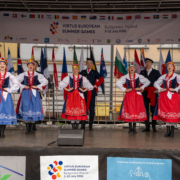
The 2026 Virtus European Summer Games kicked off on the 5th of July in the beautiful city of Bydgoszcz, Poland, marking the beginning of a week of elite competition and celebration for athletes with an intellectual impairment from across Europe and beyond.
More than 600 participants from 22 countries Australia, Belgium, Bulgaria, Czech Republic, Denmark, Estonia, Finland, France, Great Britain, Spain, the Netherlands, India, Iceland, Israel, Italy, Portugal, Norway, Slovenia, Sweden, Turkey, Ukraine and Poland, have gathered in Bydgoszcz for the Games, including athletes, coaches, officials and representatives of the Virtus movement. The Opening Ceremony provided a fitting welcome to all delegations, celebrating friendship, inclusion and the unifying power of sport.
Athletes will be competing across eight sports: Athletics, Swimming, Handball, Basketball, Tennis, Table Tennis, Road Cycling and Indoor Rowing.
The ceremony was attended by the Governing Board of Virtus and Virtus Europe, the Local Organising Committee, invited guests, and national and local government representatives.
The event was further honoured by the presence of the Deputy Minister of Sport and Tourism of Poland and the Mayor of Bydgoszcz, the Host City of the Games.
Fausto Pereira, President of Virtus Europe, declared the Games open, welcomed the athletes and wished them success as they prepare to compete over the coming days.
Multiple-time Paralympic and Virtus Champion, Karolina Kucharczyk-Urbańska, took the Oath on behalf of all the athletes. Her pledge symbolised every athlete’s commitment to compete with honesty, respect and fair play throughout the Games.
The Opening Ceremony celebrated the strength of the international Virtus community and recognised the dedication and achievements of athletes with an intellectual impairment. It also highlighted the important role of sport in creating opportunities, building friendships and inspiring communities across Europe.
With the Games now officially underway, Bydgoszcz is set to host an exciting week of competition as Europe’s best athletes showcase their talent, determination and sporting excellence on the international stage.
https://virtus.sport/wp-content/uploads/2026/07/Inauguracja-86-scaled.jpg17072560Mousumi Mazumdarhttps://virtus.sport/wp-content/uploads/2026/02/Logo-40years-big-300x107.pngMousumi Mazumdar2026-07-07 19:49:292026-07-07 20:25:292026 Virtus European Summer Games Officially Open in Bydgoszcz, Poland
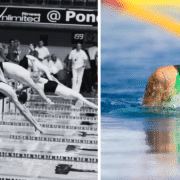
For more than 40 years, Virtus has built a global movement where athletes with an intellectual disability can compete, excel and belong. At the heart of this journey is swimming – one of the organisation’s most successful, recognisable and influential sports.
From its beginnings at the first World Games for Athletes with an Intellectual Disability in Härnösand, Sweden, in 1989 to today’s elite international championships and Paralympic success, Virtus Swimming has created opportunities for athletes around the world to perform at the highest level.
Swimming has been part of the Virtus movement since the inaugural World Games for Athletes with an Intellectual Disability in 1989. From the very beginning, it quickly became one of the most popular sports within the programme.
The widespread availability of swimming pools around the world helped the sport grow rapidly, allowing athletes from an increasing number of countries to train, compete and develop. Today, swimming remains one of the cornerstones of the Virtus movement.
A Growing International Competition Pathway
Over the past four decades, Virtus has established a strong international competition pathway for swimmers, from regional development opportunities through to elite world-level competition.
Virtus has organised eight World Swimming Championships, alongside numerous regional championships across Europe, Oceania-Asia and other regions. Swimming has also featured at every edition of the Virtus Global Games, providing athletes with regular opportunities to compete against the world’s best.
Virtus competitions are conducted under the World Para Swimming rules and regulations, ensuring high standards and strong alignment with the Paralympic competition pathway.
A major milestone came at the 2017 Virtus World Swimming Championships in Aguascalientes, Mexico, where two new trial eligibility groups were introduced for athletes with Down syndrome and athletes with autism. Following extensive research and development, the II2 class for athletes with an intellectual disability and significant additional impairments became a full medal event at the Brisbane 2019 Global Games, followed by the II3 class for athletes with autism at the 2023 Virtus Global Games in Vichy, France.
These milestones marked a significant step forward in Virtus’ commitment to expanding inclusion and creating opportunities for a wider range of athletes with intellectual disabilities and autism. Since then, the II2 and II3 classes have continued to grow rapidly, producing world records, international champions and inspiring performances.
Swimming also became one of the first sports for athletes with an intellectual disability to feature at the Sydney 2000 Paralympic Games, alongside athletics and basketball. Today, athletes continue to compete through the S14 classification, providing a clear pathway for II1 athletes from Virtus competition to the highest level of Paralympic sport.
Record-Breaking Athletes and Global Stars
Over the years, many Virtus swimmers have gone on to become Paralympic champions, world record holders and global ambassadors for inclusive sport.
Among those who have stood on the Paralympic podium are Great Britain’s Jessica-Jane Applegate, Bethany Firth, Reece Dunn and Poppy Maskill, Japan’s Naohide Yamaguchi, Denmark’s Alexander Hillhouse, Brazil’s Gabriel Bandeira, Débora Carneiro and Beatriz Carneiro, Australia’s Benjamin Hance, Canada’s Nicholas Bennett, Hong Kong China’s Yui Lam Chan, and Spain’s Michelle Alonso. Many have broken Virtus, Paralympic and World records while inspiring future generations of swimmers.
Virtus has also celebrated exceptional champions across the II2 and II3 competition classes. Athletes including Ayako Morishita (II2) of Japan, Minke Janse van Rensburg (II2) of South Africa, Spain’s Camino Martinez de la Riva (II2), Italy’s Mattia Tonono (II2) Kate Wallington (II3), Amie Holwill (II3) and Alexander Hejaij (II3) of Australia, Axel Parisot (II3) of France, Denmark’s Marius Danielson (II3) have broken world records, won multiple international titles and helped raise the standard of Virtus Swimming.
For many athletes, swimming represents far more than competition. It provides confidence, independence, structure and routine, while supporting mental wellbeing and creating opportunities for friendship, travel and international representation. For many athletes with autism and intellectual disabilities, the water also offers a calm and supportive environment, making swimming one of the most accessible and meaningful sports.
Looking Ahead
As Virtus celebrates its 40th anniversary, swimming continues to stand among the organisation’s greatest success stories. From the first championships in 1989 to world records, international titles and Paralympic podiums, the sport has continued to grow in quality, participation and global reach.
This remarkable journey has only been possible through the dedication of athletes, coaches, technical officials, volunteers, member organisations and the Virtus Swimming Committee, whose passion and commitment have shaped the programme over the past four decades.
Forty years on, Virtus Swimming continues to inspire future generations to dream bigger, compete with confidence and believe they belong on the world stage. With every stroke, every record and every finish, the legacy of Virtus Swimming continues to grow.
If you know someone with an intellectual disability or autism who would like to compete in the Virtus Swimming programme, encourage them to contact their national Virtus member organisation, apply for eligibility and begin their journey towards international competition – including the Virtus Global Games Cairo 2027.
Virtus at 40: Championing Excellence Since 1986
https://virtus.sport/wp-content/uploads/2026/07/swimming-virtus.png6301500Mousumi Mazumdarhttps://virtus.sport/wp-content/uploads/2026/02/Logo-40years-big-300x107.pngMousumi Mazumdar2026-07-06 20:04:292026-07-13 21:41:38Forty Years of Making Waves – The Story of Virtus Swimming
For more than 40 years, Virtus has built a global movement where athletes with an intellectual disability can compete, excel and belong. At the heart of this journey is athletics – the largest sport in the Virtus programme – covering outdoor track and field, indoor athletics, cross country, road racing and the marathon.
Together, these disciplines provide a complete competition pathway for athletes of all abilities, across every environment and every stage of their sporting journey.
Since its earliest competitions in the 1980s, Virtus recognised athletics as one of the most accessible and inclusive sports. What began with traditional track and field events soon grew into a comprehensive athletics programme that reflects the full diversity of the sport.
Over the years, Virtus introduced Outdoor World Championships, Indoor Championships, Cross Country Championships, and road racing events, including the half-marathon, 10K and marathon. This expansion has allowed athletes with an intellectual disability to compete across the same range of disciplines as athletes in mainstream athletics.
A Legacy of International Competition
Athletics has been central to the Virtus movement since the organisation was founded. It has grown from standalone championships into one of the flagship sports at every Global Games edition.
Initially, competition was available for athletes in the II1 category. At the Brisbane 2019 Global Games, athletes in the II2 class (athletes with an intellectual disability and significant additional impairments, such as Down syndrome) were added to the medal programme. This was followed by the introduction of the II3 class for athletes with autism at the 2023 Virtus Global Games in Vichy, France, creating even more opportunities for athletes to compete at the highest level.
Athletics made its Paralympic debut at the Sydney 2000 Paralympic Games, alongside swimming and basketball. Today, athletes compete in the T20 400m and 1500m, and the F20 long jump and shot put events, showcasing the highest level of performance on the Paralympic stage.
Over the past four decades, Virtus has organised an impressive international competition calendar, including 12 Outdoor World Athletics Championships, 12 Indoor World Athletics Championships, 10 World Cross Country Championships and 11 World Half Marathon and 10K Championships.
These events have been hosted across Europe, Asia, Oceania and the Americas, bringing together athletes from an ever-growing number of nations and continually raising the standard of competition. Throughout its history, Virtus Athletics has provided consistent international competition opportunities, helping athletes develop, gain experience and prepare for success on both the Virtus and Paralympic stages.
Inspiring Champions
Virtus Athletics has produced generations of world-class athletes who have inspired millions through their achievements.
Poland’s Barbara Bieganowska-Zając and Karolina Kucharczyk, the USA’s Breanna Clark and Michael Brannigan, Portugal’s Lenine Cunha, India’s Deepthi Jeevanji, Türkiye’s Aysel Önder, Spain’s David Pineda, Malaysia’s Latif Romly, and Ukraine’s Maksym Koval are some of many athletes with an intellectual impairment who have reached the Paralympic podium.
Virtus has also celebrated outstanding champions across II2 and II3 eligibility groups. Athletes including Luca Venturelli (II3) from Italy, Sadie Graham-Mulvaney (II3) from Great Britain, Siarne Davis (II3) from Australia, Hugo Taheny (II2) from Australia, Chiara Zeni (II2) from Italy, and Kai Kameyama (II2) from Japan are some of many athletes who have broken world records, won multiple international titles and helped raise the standard of Virtus Athletics.
Together, these athletes represent far more than medals. They demonstrate the continued growth of athletics across sprinting, middle-distance, endurance and field events, inspiring future generations to believe in what is possible.
Looking Ahead
Virtus Athletics is defined not only by the range of events it offers, but by its commitment to fair competition, athlete-centred support and inclusive pathways across all eligibility groups — including the continued development of the II2 and II3 classes.
Looking ahead, Virtus remains committed to growing the programme further, increasing visibility for athletes across every discipline and expanding opportunities within the Paralympic Games.
As Virtus marks its 40th anniversary, we reflect on how far athletics has come – from those first competitions in the 1980s to a global programme that now spans every discipline the sport has to offer, reaching athletes across dozens of nations and every corner of the world. It is a legacy built not by one person or one moment, but by generations of athletes, coaches, officials, volunteers and member organisations who believed that athletes with an intellectual disability deserved a stage worthy of their talent. We thank every one of them for making this programme what it is today. Forty years on, Virtus Athletics continues to create opportunities, inspire excellence and open new pathways for future generations.
If you know someone with an intellectual disability or autism who would like to compete in the Virtus athletics programme, encourage them to contact their national Virtus member organisation, apply for eligibility and begin their journey towards international competition – including the Virtus Global Games Cairo 2027.
Virtus at 40: Championing Excellence Since 1986
https://virtus.sport/wp-content/uploads/2026/06/Prohibited-substances-in-Doping-1500-x-630-px-6-4.png6301500Mousumi Mazumdarhttps://virtus.sport/wp-content/uploads/2026/02/Logo-40years-big-300x107.pngMousumi Mazumdar2026-06-29 21:17:002026-06-29 21:22:20Four Decades of Inclusion and Opportunity On Track – The Story of Virtus Athletics
Virtus is delighted to announce the appointment of Professor Jan Burns MBE as the new Head of Research and Strategic Development for the Virtus Academy.
Jan has earlier served as Virtus Head of Eligibility for more than 17 years on the Virtus Governing Board. Throughout that time, Jan has played a pivotal role in shaping the future of sport for athletes with intellectual disabilities and has been one of the key figures behind many of the organisation’s most significant achievements.
Jan has played a central role in establishing the Virtus Academy in 2021 too, creating a platform to advance research, education and knowledge-sharing across the Virtus movement. Her appointment to this new role ensures that her vision, expertise and passion will continue to guide the Academy’s future development. In her new role, Jan will contribute to the further development of the Academy and offer advice and help in our ongoing and future research and education projects.
Jan was one of the driving forces behind the development of the evidence-based eligibility and classification system that led to the re-inclusion of athletes with intellectual disabilities in the Paralympic Games. Working alongside the International Paralympic Committee and leading international researchers, she helped establish the scientific framework that continues to underpin classification in the sport today.
Her outstanding contribution has been recognised globally. In 2012, she received the UK Research Council’s Gold Podium Research Award for her work supporting the London Paralympic Games, before being awarded an MBE in 2015 for services to disability sport and research. In 2023, she was appointed Chair of the International Paralympic Committee’s Classification Compliance and Oversight Committee, further recognising her expertise and leadership in the field.
A major focus of her work is currently supporting several important evidence-based classification research projects that will help strengthen and evolve eligibility systems for future generations of athletes with intellectual disabilities. Further updates on these initiatives will be announced in due course.
As Virtus marks 40 years of advancing inclusion through sport, Professor Jan Burns MBE stands among the most influential figures in the organisation’s history. From helping to shape world-leading classification systems to founding the Virtus Academy, her contributions have left a lasting impact on athletes, researchers and sport leaders across the globe. This appointment not only recognises her extraordinary legacy but also ensures that her expertise will continue to drive innovation and opportunity for future generations.
https://virtus.sport/wp-content/uploads/2026/06/Prohibited-substances-in-Doping-1500-x-630-px-6-3.png6301500Mousumi Mazumdarhttps://virtus.sport/wp-content/uploads/2026/02/Logo-40years-big-300x107.pngMousumi Mazumdar2026-06-24 19:03:592026-06-24 19:18:57Professor Jan Burns MBE Appointed as Head of Research and Strategic Development for the Virtus Academy
Virtus – the International Sport Federation for Athletes with an Intellectual Impairment is delighted to announce the second annual World Intellectual Disability Day, to be celebrated on 25 July 2026.
World Intellectual Disability Day was established by Virtus in 2025 to raise awareness of intellectual disability, challenge stereotypes, and create opportunities for people with an intellectual disability to share their stories, achievements, aspirations, and contributions. It brings together individuals, families, organisations, educators, employers, advocates, and communities in a shared commitment to inclusion, respect, and opportunity.
The 2026 theme, “This is Me – This is Us,” celebrates both individuality and belonging.
For many people with an intellectual disability, the challenges they face are often misunderstood because their disability is not ‘visible’. As a result, they are too often defined by the things they cannot do rather than being recognised for their talents, achievements, and potential. World Intellectual Disability Day provides an opportunity to change that narrative by ensuring people with an intellectual disability can tell their own stories and be celebrated for who they are.
It encourages people with an intellectual disability to share who they are, what they are proud of, and the goals and dreams that inspire them. It recognises the friendships, families, teams, schools, workplaces, and communities that support and empower people with an intellectual disability, highlighting the strength that comes from connection and belonging.
To mark the day, people around the world are invited to share short videos, photos, and stories on social media, highlighting their achievements, aspirations, and everyday experiences. Organisations, schools, sports clubs, workplaces, and community groups are also encouraged to join the celebration. A range of digital resources has been developed by Virtus to support participation and can be downloaded from the official campaign webpage.
This year’s celebration is particularly significant as it forms part of the 40th anniversary of Virtus, marking four decades of advancing inclusion and sporting opportunities for people with an intellectual disability. Since 1986, Virtus has helped create pathways for athletes to compete at the highest levels of international sport and has played a leading role in promoting recognition, respect, and excellence across the global intellectual disability community.
As Virtus celebrates this important milestone, World Intellectual Disability Day offers an opportunity to recognise the progress that has been made while continuing to advocate for a future where people with an intellectual disability are fully included, empowered, and valued in every aspect of society.
On 25 July, the world is invited to listen, learn, and celebrate.
This is Me – This is Us.
Virtus at 40: Championing Excellence Since 1986
https://virtus.sport/wp-content/uploads/2026/06/13.png6301500Mousumi Mazumdarhttps://virtus.sport/wp-content/uploads/2026/02/Logo-40years-big-300x107.pngMousumi Mazumdar2026-06-22 19:19:512026-06-22 19:19:51World Intellectual Disability Day Returns on 25 July for Its Second Global Celebration
Virtus is proud to launch its new Inclusive Communication Guide, a practical guide designed to help organisations, staff, volunteers, coaches, educators, and service providers communicate more effectively with individuals with an intellectual disability.
The guide has been developed to promote inclusive communication and ensure that information is accessible, understandable, and meaningful for everyone. It provides simple, practical advice on using clear language, short sentences, and visual supports to improve understanding and participation.
Communication barriers can prevent people from accessing information, making decisions, and fully participating in everyday life. The Inclusive Communication Guide aims to address these barriers by encouraging communication that is clear, respectful, and person-centred.
“Inclusive communication is about more than simplifying words. It is about ensuring that everyone has the opportunity to understand information, express their views, make informed choices, and participate fully in their communities“, says Mousumi Mazumdar, Virtus Marketing and Communication Manager.
The Inclusive Communication Guide supports the principles of inclusion, equity, and respect. By adopting Inclusive communication practices, organisations can create environments where people feel valued, informed, and empowered.
Virtus encourages all stakeholders, partners, and community members to use the guide and consider how Inclusive communication can be embedded into everyday practice.
As Virtus celebrates 40 years of advancing inclusion for people with intellectual disabilities, we are proud to launch our new Inclusive Communication Guide. This resource reflects Virtus’ ongoing commitment to ensuring that everyone has the opportunity to understand, participate, and be included.
Virtus at 40: Championing Excellence Since 1986
https://virtus.sport/wp-content/uploads/2026/06/inclusive-communication.png10242438Mousumi Mazumdarhttps://virtus.sport/wp-content/uploads/2026/02/Logo-40years-big-300x107.pngMousumi Mazumdar2026-06-10 19:31:192026-06-10 19:41:22Virtus Launches Inclusive Communication Guide to Support Inclusion and Accessibility
Virtus is pleased to announce the appointment of three new members to the Virtus Athletes’ Council, further strengthening athlete representation across the global Virtus movement.
Joining the Council are Alexander Nielsen (Denmark), Luca Venturelli (Italy), Selena Aguilar (ESP) and Olívia Kákosy (Hungary).
The four athletes will join existing Council members Haleigh Bates (USA), Dimitrios Arapoglou (Greece) and Madeleine McTernan (Australia) under the leadership of Chair Lenine Cunha (Portugal).
Their appointment continues the important work of the Virtus Athletes’ Council, a body established in 2025 to ensure athletes have a direct voice in shaping the future of the organisation.
The creation of the Council marked a historic milestone in Virtus’ 40-year journey. Since its foundation in 1986, Virtus has worked tirelessly to create opportunities for athletes with intellectual disabilities to compete at the highest levels of international sport. The launch of the Athletes’ Council represented the next step in that evolution – moving beyond creating opportunities to compete and empowering athletes to actively influence the decisions that affect them.
The Council was officially launched during the 2025 Virtus General Assembly in Cairo, Egypt, where Portuguese Paralympic medallist and Virtus Ambassador Lenine Cunha was appointed as its inaugural Chair.
“I want to raise awareness and motivate other athletes with an intellectual disability to compete at high-level sport through this council“, says Alexander.
(L-R) Virtus Athletes’ Council members: Selena Aguilar, Alexander Nielsen, Madeleine McTernan, Lenine Cunha, Olívia Kákosy, Luca Venturelli, Haleigh Bates and Dimitrios Arapoglou.
Launching the Council in Cairo, Lenine spoke passionately about the importance of athlete leadership and representation. For Lenine, the mission has always been clear: ensuring athletes with intellectual disabilities are represented not only on the field of play but also in the rooms where decisions are made.
“Being part of the Council taught me that true inclusion is not just a beautiful word – it is constant action. It is fighting to make sure that everyone has equal opportunities, regardless of the type of disability.”
The Athletes’ Council provides a formal platform for athletes to share ideas, contribute to strategic planning, raise concerns and help guide the future direction of Virtus. Through regular engagement with athletes across all regions and eligibility groups, the Council helps ensure that athlete experiences remain central to the organisation’s decision-making.
As Virtus reflects on four decades of progress, the Athletes’ Council stands as one of the most significant developments in its history. It reflects a commitment to listening to athletes, valuing their experiences and empowering them as leaders within the movement.
With the addition of Alexander Nielsen, Luca Venturelli and Olívia Kákosy, the Council continues to grow as a diverse and representative body that reflects the strength of the global Virtus community.
As we mark four decades of progress, opportunity and achievement, Virtus proudly celebrates the creation of the Athletes’ Council as one of the defining milestones of our 40-year journey. We thank our athlete leaders for stepping forward to represent their peers, challenge barriers and inspire change. Their commitment ensures that the voices, experiences and aspirations of athletes will continue to guide Virtus for generations to come.
Virtus at 40: Championing Excellence Since 1986
https://virtus.sport/wp-content/uploads/2026/06/Prohibited-substances-in-Doping-1500-x-630-px-6.png10242438Mousumi Mazumdarhttps://virtus.sport/wp-content/uploads/2026/02/Logo-40years-big-300x107.pngMousumi Mazumdar2026-06-02 19:30:502026-06-16 00:34:49Virtus Athletes’ Council Welcomes Four New Athlete Members
For more than three decades, the Portuguese athlete has inspired the world through his performances on the track and field. But in 2024, Lenine achieved something even bigger than medals – he made history by becoming the first athlete with an intellectual disability ever elected to the International Paralympic Committee (IPC) Athletes’ Council.
It was a milestone not only for Lenine but for millions of athletes with an intellectual disability around the world whose voices had long been underrepresented within the Paralympic Movement.
A Career Built on Excellence and Perseverance
Lenine’s international career began in 2000, and over the years, he established himself as one of the most successful athletes in Virtus history.
Across his remarkable journey, he has won more than 270 international medals, including a bronze medal at the London 2012 Paralympic Games, multiple titles and gold medals at the Virtus Global Games and appearances at three Paralympic Games – Sydney 2000, London 2012 and Rio 2016. He also became one of the very few athletes to compete and win medals at all six editions of the Virtus Global Games. Lenine also won the ‘best male athlete‘ title in 2017 and 2022 Virtus awards for his outstanding sporting achievements.
While Lenine’s athletic achievements are extraordinary, he is using his voice and the sport as a medium to advocate for greater inclusion and representation for athletes with an intellectual disability.
A Historic Election – Making the Invisible Visible
In 2024, Lenine was shortlisted as a candidate for the IPC Athletes’ Council elections during the Paris Paralympic Games – a historic first for an athlete with an intellectual disability.
His campaign focused on one clear message: athletes with an intellectual disability deserved to have a voice in decisions shaping the future of Paralympic sport.
For Lenine, representation was deeply personal.
“As someone who has spent his entire life with this invisible disability and made a career out of it, I understand the challenges and discrimination faced by athletes like me,” he shared during his campaign.
He spoke passionately about creating more inclusive pathways, increasing visibility for intellectual impairment within the Paralympic Movement and supporting athletes both during and after their sporting careers. His message resonated across the Paralympic Village.
In September 2024, history was made.
Lenine Cunha was elected to the IPC Athletes’ Council with the highest number of votes among all candidates. The achievement marked a defining moment for the Paralympic Movement and for Virtus, proving that athletes with an intellectual disability not only belong in elite sport but also in leadership and decision-making roles at the highest level.
Lenine Cunha at Virtus Global Games 2023, Vichy, France. Photo Credit: Kellerman
From Athlete to Leader
Lenine’s leadership journey continued in 2025 when he was appointed Chair of the newly launched Virtus Athletes’ Council during the Virtus General Assembly in Cairo.
The creation of the council represented another important step in strengthening athlete representation within Virtus, ensuring athletes remain at the heart of decision-making processes.
Addressing delegates in Cairo, Lenine delivered a powerful message:
“Paralympic sport is about much more than competition. It is about giving a voice to those who are too often unheard. This past year, I have worked every single day to ensure that these athletes are seen, respected, and included fairly. I’ve worked to make sure their talent and dedication are recognised – not just every four years, but every day: on the tracks, in the fields, in the pools, and in the decisions that shape the future of the Paralympic Movement”
He also reminded athletes with intellectual disability that their value extends far beyond results and medals.
As Virtus celebrates its 40th anniversary, we celebrate Lenine Cunha’s leadership and advocacy for athletes with an intellectual disability, along with his outstanding sporting career. Lenine Cunha has inspired thousands, showing future generations that athletes with intellectual disability can not only compete among the best in the world – they can help shape the future of sport itself.
https://virtus.sport/wp-content/uploads/2026/05/Prohibited-substances-in-Doping-1500-x-630-px-3.png6301500Mousumi Mazumdarhttps://virtus.sport/wp-content/uploads/2026/02/Logo-40years-big-300x107.pngMousumi Mazumdar2026-05-18 21:02:152026-09-01 22:13:32Lenine Cunha: Building a Legacy of Inclusion and Leadership Beyond Sport For Athletes With an Intellectual Disability
When Virtus launched – then known as the INAS-FMH – it was recognised that elite athletes with an intellectual disability lacked a pathway into high-level international competition. As part of the International Coordinating Committee (the collaboration that would later become the International Paralympic Committee), INAS-FMH grew quickly to provide high-level World and Regional Championships in a number of sports, including the 1st INAS Games in 1989 (held in Harnosand, Sweden), the first “Paralympic Games for Persons with a Mental Handicap” in Madrid in 1994 and in 1996, the Atlanta Paralympic Games. Athletes with an intellectual disability also competed in a demonstration programme at the 1998 Nagano Winter Paralympics.
In these early years – and indeed until 2016 when additional eligibility groups were added to the competition programme – the organisation organised competition in just one eligibility group: for athletes with an intellectual disability.
What is an intellectual disability?
Intellectual disability is a type of neurological impairment. It usually occurs before or during birth, though it can also develop in early childhood or adolescence and affects a person’s cognitive and intellectual functioning. That can mean differences in memory, processing information, reacting quickly, and planning or working strategically. Like anyone else, people with intellectual disabilities have a mix of strengths and weaknesses. Cognitive functioning can significantly affect performance in sport, especially in areas such as tactics, pacing, decision-making under pressure, adjusting technique in real time, such as take-off points in jumping events and processing instructions or changes in strategy quickly.
The World Health Organisation (WHO) and American Association of Intellectual and Developmental Disability (AAIDD) define an intellectual disability as a severe impairment in intellectual function (as defined by IQ) and everyday functioning (as defined by Adaptive Behaviour), where the disability is present before the age of 22. These 3 criteria form the basis of the Virtus eligibility criteria for athletes with an intellectual disability, commonly now referred to as the II1 group.
Virtus manages the worldwide system of checking and reviewing applications for athletes wishing to compete in the II1 eligibility group. This is the first step in a process known as athlete classification, where athletes with similar impairments are grouped together to ensure fair sport.
Around 2006 a comprehensive review of the eligibility process was initiated which led to many of the developments we still see today including the appointment of a global network of National Eligibility Officers (NEO’s) – volunteer psychologists based within Virtus member nations to manage the process at a country level, the formation of an international panel to check and scrutinise applications, and substantially tighter and more robust procedures including an appeals process.
At a similar time, research began to understand and measure in a scientific way the impact of intellectual disability on sports performance. A collaboration between Virtus, International Sports Federations, the IPC and a number of universities, including KU Leuven in Belgium, ensured the process for athletes with an intellectual disability was compliant with the newly published IPC Classification Code.
Over time, additional changes have been introduced to take the process online and to reflect changes to the international guidance published by WHO and AAIDD, and today the master list – the published database of eligible athletes – has grown to almost 10,000 athletes worldwide. Each year, the number of new applications grows, and in 2025, Virtus processed more than 700 new athlete applications.
Opening doors to international competitions
Today, athlete eligibility is central to everything Virtus does. Creating a fair and robust platform for elite competition has opened the doors for more than 500,000 athletes to access high-level sport competitions worldwide every year.
Today, athletes compete in athletics (T20/F20), table tennis (class 11), and swimming (S14) at the Summer Paralympic Games, in addition to a Virtus programme covering more than 16 sports.
As we enter our 40th year, Virtus thanks everyone who has helped develop and refine the athlete eligibility process and create a platform for international sport for athletes with an intellectual disability.
Virtus at 40: Championing Excellence since 1986
https://virtus.sport/wp-content/uploads/2026/05/GG23_Kellerman_20230607_0030-scaled.jpg17072560Mousumi Mazumdarhttps://virtus.sport/wp-content/uploads/2026/02/Logo-40years-big-300x107.pngMousumi Mazumdar2026-05-11 18:50:072026-05-11 18:50:07Story of II1 Competition Class – For Athletes with an Intellectual Disability
As we move into 2026, Virtus Sport is proud to launch its third edition of the anti-doping campaign Virtus Anti-Doping Awareness – 2026. Building on the foundations of our previous educational programs, this year focuses on making complex information accessible, engaging, and supportive for everyone involved in the life of an athlete with an intellectual impairment (II).
Why Education is Our Greatest Tool
For Virtus and our II athletes, anti-doping education is not just a regulatory requirement – it is a matter of empowerment. Many athletes in our community are more vulnerable to external influences or may accidentally use prohibited substances through common medications or medical prescriptions without checking the anti-doping rules (like the List of Prohibited Substances and Methods). By prioritising education, we help athletes protect their health and careers, so their hard-earned results are not at risk.
Is the Education Process Different for Athletes with an Intellectual Impairment?
Yes. While the rules (the WADA Code) are the same for everyone, the way we teach them must be different. Traditional anti-doping materials can be too much and intimidating for II athletes. Some modifications must be made to make the materials simple for II athletes, such as:
Simple language: Avoid using jargon or complicated words to educate II athletes.
Visual language: Using symbols and clear imagery to support understanding and reinforce memory through visual cues.
Repetitive and relatable: Breaking down concepts into smaller, easy-to-understand parts to reinforce learning and familiarity.
Empathetic: Shifting the focus from “punishment” to “protection”.
Building on Success: 2024 & 2025
Our awareness programs in 2024 and 2025 laid the groundwork for where we are today. Based on our latest reports, these years were defined by:
Increased engagement: A significant rise in athletes and coaches participating in our webinars and digital sessions.
Community feedback: We learned that the “Talk with the Expert” sessions were highly valued for their ability to humanise the anti-doping process.
Collaboration and global reach:By collaborating with NADOs, we reached corners of the globe where adapted anti-doping information was previously unavailable.
What’s New for the 2026 Program?
This year, we are taking a functional approach to education. Here is what you can expect from the 2026 Awareness Campaign:
Engaging Content: Our social media posts will feature a “fun look” with scenario-based proposals, helping athletes visualise real-life situations they might face.
The “Athlete Support Personnel Guide“: We recognise that coaches and parents are the first line of defence. This new guide provides them with the specific tools needed to support II athletes.
The “Accessible Athlete Guide”: A revamped, accessible guide with direct information and quick-access links to essential tools.
Education Through Play: We are publishing a series of games that National Member Organisations can distribute to their teams—a playful way to learn the rules.
Direct Connection via WhatsApp: We’ve launched a dedicated WhatsApp group for real-time updates. Scan the QR Code on our website to join the conversation!
Talk With the Expert 2026: Our YouTube series is back! This year features incredible guest speakers discussing current and vital topics in the anti-doping world.
At Virtus, we don’t just test athletes; we support them. Our goal for 2026 is to ensure that every athlete, regardless of their class (II1, II2, or II3), feels confident and informed when they are called for testing.
As Virtus celebrates its 40th anniversary, we would like to acknowledge the hard work and dedication of the Virtus Anti-Doping Committee for their continued commitment to safeguarding clean sport and upholding the integrity of competition for all athletes.
https://virtus.sport/wp-content/uploads/2026/05/Prohibited-substances-in-Doping-1500-x-630-px-4.png9452250Mousumi Mazumdarhttps://virtus.sport/wp-content/uploads/2026/02/Logo-40years-big-300x107.pngMousumi Mazumdar2026-05-06 18:27:062026-05-06 18:27:06Virtus Launches 'Anti-Doping Awareness Program 2026' for Athletes with an Intellectual Impairment
Virtus is the brand name of the International Sports Federation for athletes with intellectual impairment and is a founding member of the International Paralympic Committee. Registered as a Charitable Incorporated Organisation in the UK (1173901)
We use cookies on our website to give you the most relevant experience by remembering your preferences and repeat visits. By clicking “Accept”, you consent to the use of ALL the cookies.
This website uses cookies to improve your experience while you navigate through the website. Out of these, the cookies that are categorized as necessary are stored on your browser as they are essential for the working of basic functionalities of the website. We also use third-party cookies that help us analyze and understand how you use this website. These cookies will be stored in your browser only with your consent. You also have the option to opt-out of these cookies. But opting out of some of these cookies may affect your browsing experience.
Necessary cookies are absolutely essential for the website to function properly. These cookies ensure basic functionalities and security features of the website, anonymously.
Cookie
Duration
Description
cookielawinfo-checkbox-analytics
11 months
This cookie is set by GDPR Cookie Consent plugin. The cookie is used to store the user consent for the cookies in the category "Analytics".
cookielawinfo-checkbox-functional
11 months
The cookie is set by GDPR cookie consent to record the user consent for the cookies in the category "Functional".
cookielawinfo-checkbox-necessary
11 months
This cookie is set by GDPR Cookie Consent plugin. The cookies is used to store the user consent for the cookies in the category "Necessary".
cookielawinfo-checkbox-others
11 months
This cookie is set by GDPR Cookie Consent plugin. The cookie is used to store the user consent for the cookies in the category "Other.
cookielawinfo-checkbox-performance
11 months
This cookie is set by GDPR Cookie Consent plugin. The cookie is used to store the user consent for the cookies in the category "Performance".
viewed_cookie_policy
11 months
The cookie is set by the GDPR Cookie Consent plugin and is used to store whether or not user has consented to the use of cookies. It does not store any personal data.
Functional cookies help to perform certain functionalities like sharing the content of the website on social media platforms, collect feedbacks, and other third-party features.
Performance cookies are used to understand and analyze the key performance indexes of the website which helps in delivering a better user experience for the visitors.
Analytical cookies are used to understand how visitors interact with the website. These cookies help provide information on metrics the number of visitors, bounce rate, traffic source, etc.
Advertisement cookies are used to provide visitors with relevant ads and marketing campaigns. These cookies track visitors across websites and collect information to provide customized ads.