2018 World Intellectual Impairment Sport Swimming Open Championships (Americas) cancelled

2018 World Intellectual Impairment Sport Swimming Open Championships (Americas) cancelled

The International Federation for Athletes with Intellectual Impairments (World Intellectual Impairment Sport) has announced the cancellation of the 2018 World Intellectual Impairment Sport Swimming Open Championships (Americas), following a request from the Local Organising Committee (LOC).

The competition, which was due to take place from 29 August – 2 September in Santiago del Estero, Argentina, would have been the first regional competition of its kind in the Americas.

However, due to low athlete numbers, the Argentina Federation for Sports for People with Intellectual Impairments (FADDIM) determined they could not financially support the event.

Dave Harman, Chairperson of the World Intellectual Impairment Sport Swimming Committee said: “We are very disappointed to have to cancel Santiago del Estero 2018 as it would have been a major milestone in the development of swimming for athletes with intellectual impairments.

“However, we do understand the difficult position that the LOC found themselves in. A certain number of athletes and teams are required to make any competition financially viable. Unfortunately in this case with just over two months to go, we did not have enough for the event to go ahead.

“New additions to the calendar also always take time to establish. We remain determined to expand the number of competitions and are now looking to where we can hold future events in the Americas and around the world. I encourage countries to consider investing in the future so that we can build the level of high performance swimming for the benefit of all athletes.”

Gloria Agblemagnon during a shot-put throw at the London 2017 World Para Athletics Championships

Agblemagnon targeting home hat-trick

By Gaurav Mokhasi | for World Intellectual Impairment Sport

Two years since she made her Paralympic debut aged only 18 at Rio 2016, France’s Gloria Agblemagnon is raring to go again.

Fresh out of a gruelling training session where she is preparing for the 2018 World Intellectual Impairment Sport European Championships Games on home soil in Paris from 14-22 July, Agblemagnon spoke of her aspirations and the road ahead.

“I’m determined to do well in Paris next month”, the 20-year-old said. “I’m going for three medals, hoping to throw over 45m each in the discus and hammer events and over 13m in the shotput.”

Having already claimed gold in the hammer and discus at the 2017 International Federation for Athletes with Intellectual Impairments (World Intellectual Impairment Sport) Athletics Championship and in shotput at the 2018 World Intellectual Impairment Sport World Indoor Athletics Championships, Agblemagnon’s chances look good.

The Frenchwoman first discovered she had a talent for the three events when she was 13. “I was better at throwing than other track & field events”, she recalled. “I started with hammer and got into discus and shotput slightly later. By the time I was 15, I had realised this wasn’t just a hobby for me. I wanted to pursue this seriously. I knew I could win medals internationally, but would have to train very hard.”

And train hard she does. She follows a strict weight training regimen guided by her coach, Maxime Bauchet. However Agblemagnon laughs when talking about her diet, saying it is not something she worries about. She puts her dedication on the training ground down to her experience at Rio 2016. “I wasn’t training enough before Rio. It was after that unique experience that I realised the value of training – how much harder I’d have to work to compete at that level.”

Improving on Rio 2016

The Paralympics were a defining moment, not just from a sporting perspective but also a psychological one for Agblemagnon: “I didn’t realise the scale of the event in the beginning – how big everything would be. But as the days went by, I started getting really stressed. It was difficult.”

Having matured since then, Agblemagnon is determined to set the record straight at the Paralympics in Tokyo 2020 and Paris 2024. “I want to win a medal in shotput at Tokyo. But the biggest dream and motivator for me is to win the gold at home in Paris 2024.”

It is not all fierce competition and training for Agblemagnon though. In fact, one of the main reasons she took up sports is because it helps her maintain balance in her personal life. “Playing these sports gives me great pleasure. It helps me relax. My days become less stressful after I spend time out on the field. I love watching the discus as it flies away through the air. It calms me. I like beating my personal records, sure. But I also like learning about the technical aspects of the sports I play, be it the styles of throwing or how I can improve my rotation. Shotput has become my favourite sport now because of how much time I’ve spent training for it and learning about it.”

Agblemagnon will be in action at the 2018 World Intellectual Impairment Sport European Championships Games, organised by World Intellectual Impairment Sport Europe, in Paris from 14-22 July. She will also compete at the 2019 World Intellectual Impairment Sport Global Games in Brisbane, Australia – the world’s biggest high performance sports event for athletes with an intellectual impairment.

Translation provided by Maxime Bauchet


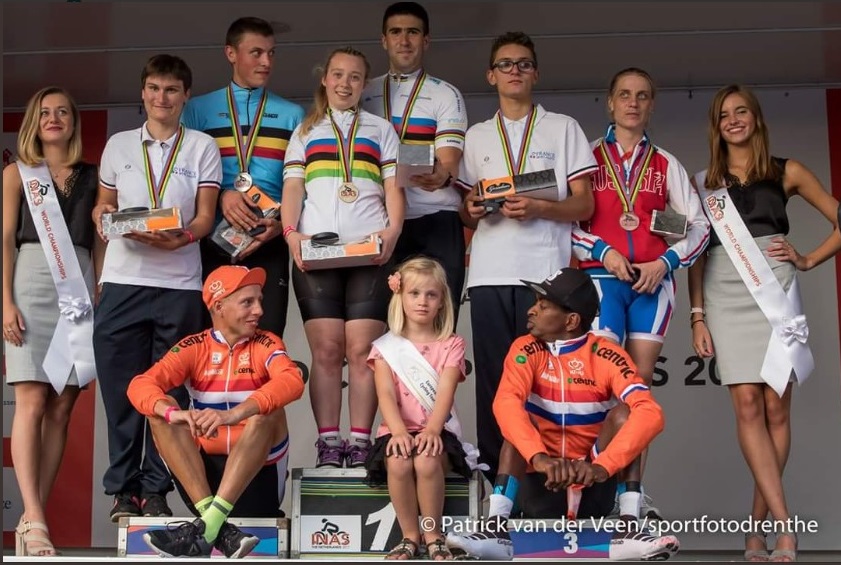
Cyclist with intellectual impairments line-up on the podium after receiving their medals

Champion Lars de Jong prepares for 2018 World Intellectual Impairment Sport Cycling Worlds

By Marcia De Wolf | For World Intellectual Impairment Sport

It is what dreams are made of: winning gold at your first World Championships.

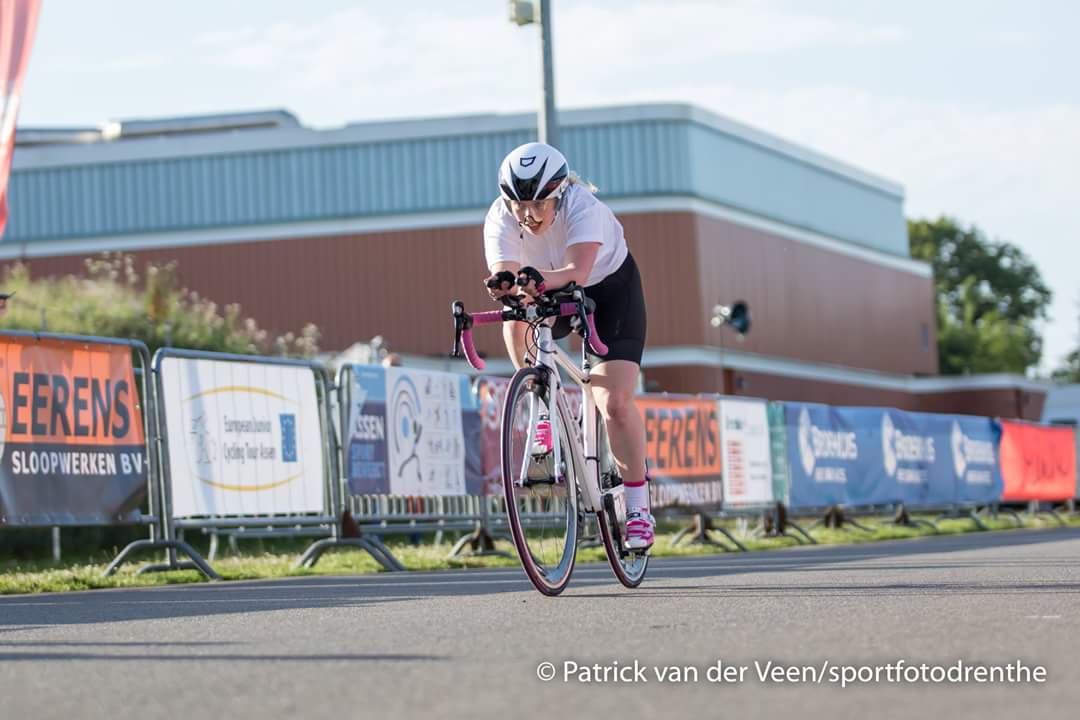
That is exactly what Belgian cyclist Lars de Jong did in Assen, The Netherlands, in 2017, winning the men’s road race title and beating defending champion Jeremy Texeira Pereira of France.

He even had a chance to take gold in the individual time trial. De Jong pushed Texeira Pereira all the way and coming within one second of the lead.

“I was very surprised, I never thought I had a chance to be the world champion in my first try! I cannot describe how I felt, everyone was so happy,” de Jong said.

He is now firmly focused on the next World Championships, taking place during the International Federation for Athletes with Intellectual Impairments (World Intellectual Impairment Sport) European Games in Paris, France, from 14-21 July.

But de Jong knows it will not be easy to return to the top three.

“There are cyclists such as Dutch riders Davy Mertens and Jonathan Duinkerke, French athletes Jeremy Texeira Pereira and Alexandre Morel, who were really strong in Assen at the World Championships.

“I am not sure how I can beat them this time but I am going to work very hard and try to win.”

Duinkerke was a bronze medallist from the road race last year behind de Jong. Alexandre Morel took the same colour in the time trial. Davy Mertens was a top five finisher in both events.

The young cyclist

Cycling comes natural to de Jong who used the sport to improve himself.

“When I was small I used to go cycling after school to relax. I enjoyed it so much that I joined a cycling club with my dad. I learned to bike there and got a lot of confidence from it,” he said.

He got his competitive start in October 2015.

“There was a G-biking cyclo cross in Antwerp and I really enjoyed that as well. I won the 2016 and 2017 Championships and decided to start road racing as well. When we found out about the World Championships in Assen, we tried to see if I could participate and I was allowed to. It was amazing, I came second in the time trial and won the road race!”

De Jong says his life is all about cycling: “It gives me confidence and I feel calm and safe when biking. My problems disappear when I get on my bike.”

The 2017 World Intellectual Impairment Sport European Games, organised by World Intellectual Impairment Sport Europe, will feature the World Intellectual Impairment Sport Cycling World Championships between 16-19 July.


Two table tennis players are captured mid-shot

Four countries progress to full bid stage for 2023 World Intellectual Impairment Sport Global Games

Argentina, India, Japan and Mexico will progress to the final stage of bidding for the 2023 International Federation for Athletes with Intellectual Impairments (World Intellectual Impairment Sport) Global Games.

In what was a highly competitive first stage of the bid process, World Intellectual Impairment Sport members were asked to submit expressions of interest before being shortlisted by the Global Games Committee.

The four countries will now have until the beginning of 2019 to submit their formal, full bids before the successful host is announced in June 2019.

“We have been hugely encouraged by the response to host the Global Games, showing that more and more countries are keen to stage the world’s largest elite sports event for athletes with intellectual impairments,” Marc Truffaut, World Intellectual Impairment Sport President, said.

“Each of the candidates has recognised the unique opportunity to not only host more than 1,000 of the world’s best athletes in a variety of sports, but also to change perceptions in their countries and regions. We are delighted to be taking this number of bids forward to the next stage and I would like to thank each one of them for their efforts so far.”

This edition sees more regions than ever before vying to stage the Games. Europe has hosted four of the five editions and the last event in 2015 was hosted in Guayaquil, Ecuador. Brisbane, Australia, will host in 2019.

Bollnas, Sweden; Liberec, Czech Republic, and Liguria, Italy, staged in 2004, 2009 and 2011, respectively.

Truffaut continued: “The locations of the final four bids shows the growth in profile and prestige of the Global Games around the world, and each country has something very unique to offer.

“The next stage will allow us to see exactly how they plan to build on previous editions. I encourage them to think carefully about how they can do that. We aim for each Global Games to be different and better than the last and we are very excited to be standing on the edge of history once again.”

The official bid countries must now submit their detailed plans in key areas such as facilities and transport; anti-doping; accommodation; media and digital media; marketing and branding; venues; legacy; staffing and budgets by 31 January 2019.

All bids will be reviewed by the Global Games Committee before a successful host is chosen by the Governing Board.

About the World Intellectual Impairment Sport Global Games

The World Intellectual Impairment Sport Global Games feature athletics, basketball, swimming, table tennis, futsal, indoor and outdoor rowing, road cycling, taekwondo and tennis. Organisers can also submit applications for demonstration sports.

The event always takes place in the year ahead of the Paralympic Games. Many medallists have used the Global Games as a springboard, going onto make the podium at the Paralympics. For those athletes competing in non-Paralympic sports it is the highest level they can reach.

More information is available at the World Intellectual Impairment Sport Global Games page of inas.org.

Leslie Cichocki

500 days to go: Cichocki getting faster after switching clubs

With 500 days to go until the 2019 International Federation for Athletes with Intellectual Impairments (World Intellectual Impairment Sport) Global Games, US swimmer Leslie Cichocki believes she can win her first gold medals at the event.

Being staged in Brisbane, Australia, between 11-20 October, the Global Games will take place just under one year ahead of the Tokyo 2020 Paralympics.

Cichocki, who claimed three silvers and a bronze at the 2015 edition, has recently changed clubs. She now has her eye on her first titles with her times rapidly improving.

“I absolutely think I can win gold especially after switching to a swim club that has coaches who are better with me and help me more with my technique,” Cichocki said.  “Since joining my current team, I have gotten my personal best times in most of my events.”

Cichocki made history in 2016 when she became the first swimmer with an intellectual impairment to compete for the USA at a Paralympic Games.

Instead of keeping that incredible achievement to herself, the 29-year-old has used it inspire the next generation.

“It was greatest experience of my life,” she said. “I am able to tell my teammates about my experiences which helps encourage them to try as hard as they can.”

In the build-up to the World Intellectual Impairment Sport Global Games Cichocki may also compete at the 2018 World Intellectual Impairment Sport Open Swimming Championships (Americas) in Santiago del Estero, Argentina, from 29 August – 2 September.

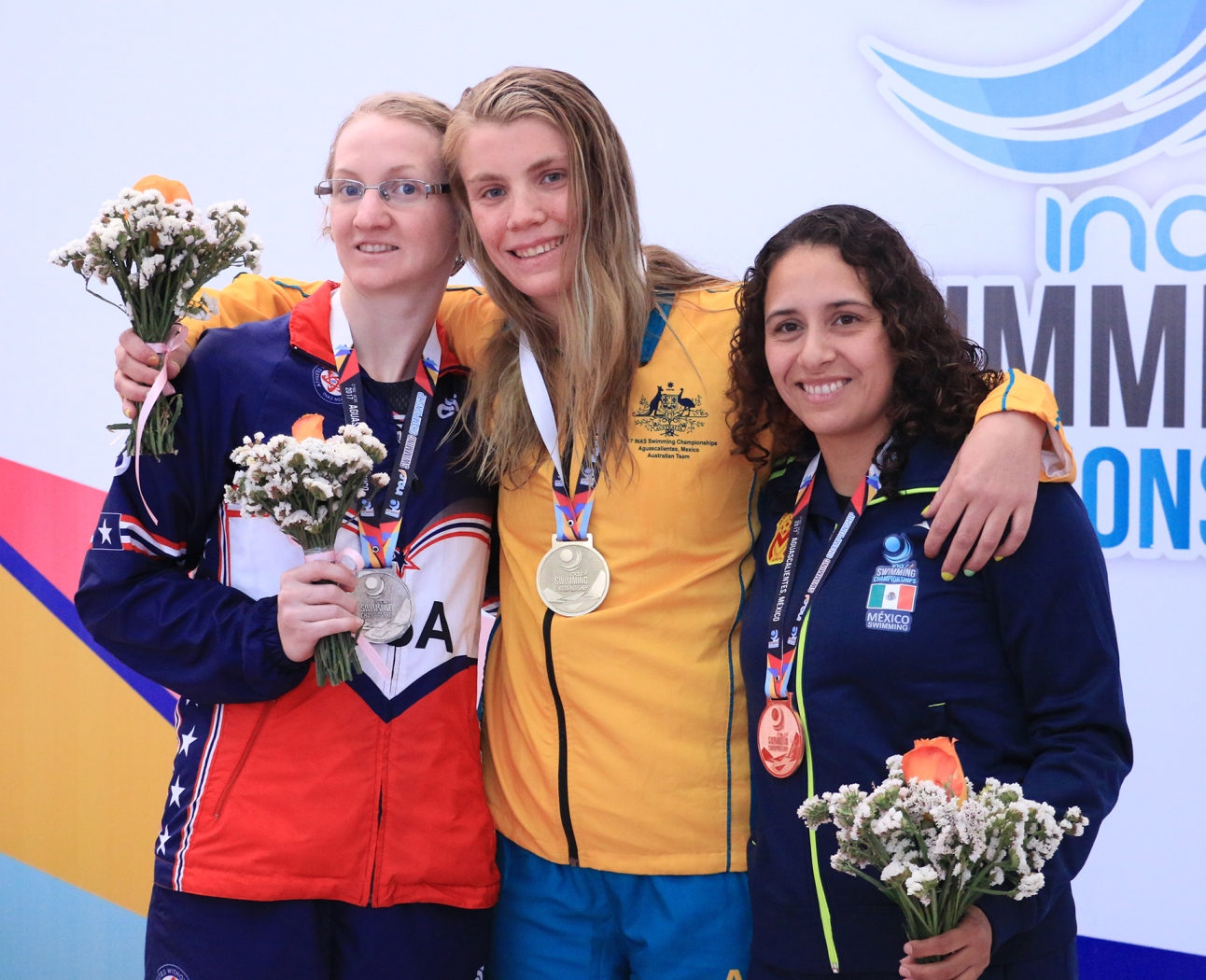
If she swims, Cichocki wants to build on her performance from the 2017 World Intellectual Impairment Sport Swimming Championships. There she won four silver and five bronze medals.

All of this goes towards her ultimate aim of competing at Tokyo 2020 and beyond. Cichocki wants to swim at the highest levels for as long as she can.

Having started the sport at the age of five, Cichocki has gone on to be one of the top-ranked swimmers. Her highest placing in the World Para Swimming rankings is currently fifth in the 100m backstroke S14. She also has a sprinkling of other top 10 and top 20 places across strokes and distances.

“I think swimming a great way to learn about life especially self-discipline and it helps keep me organised,” Cichocki said.

About the 2019 World Intellectual Impairment Sport Global Games

The World Intellectual Impairment Sport Global Games will feature athletics, basketball, swimming, table tennis, futsal, indoor and outdoor rowing, road cycling, taekwondo and tennis. Competition runs from 11-20 October.

The event always takes place in the year ahead of the Paralympic Games. Many medallists have used the Global Games as a springboard, going onto make the podium at the Paralympics. For those athletes competing in non-Paralympic sports it is the highest level they can reach.

More information is available at the World Intellectual Impairment Sport Global Games page of inas.org.

Archie Graham looks to the sky as he celebrates winning the Australian title in 2015

500 days to go: Australia’s Archie Graham shares the secret to his success

Australian tennis player Archie Graham will be one of the faces to watch when his home 2019 International Federation for Athletes with Intellectual Impairments (World Intellectual Impairment Sport) Global Games get underway in Brisbane in 500 days’ time.

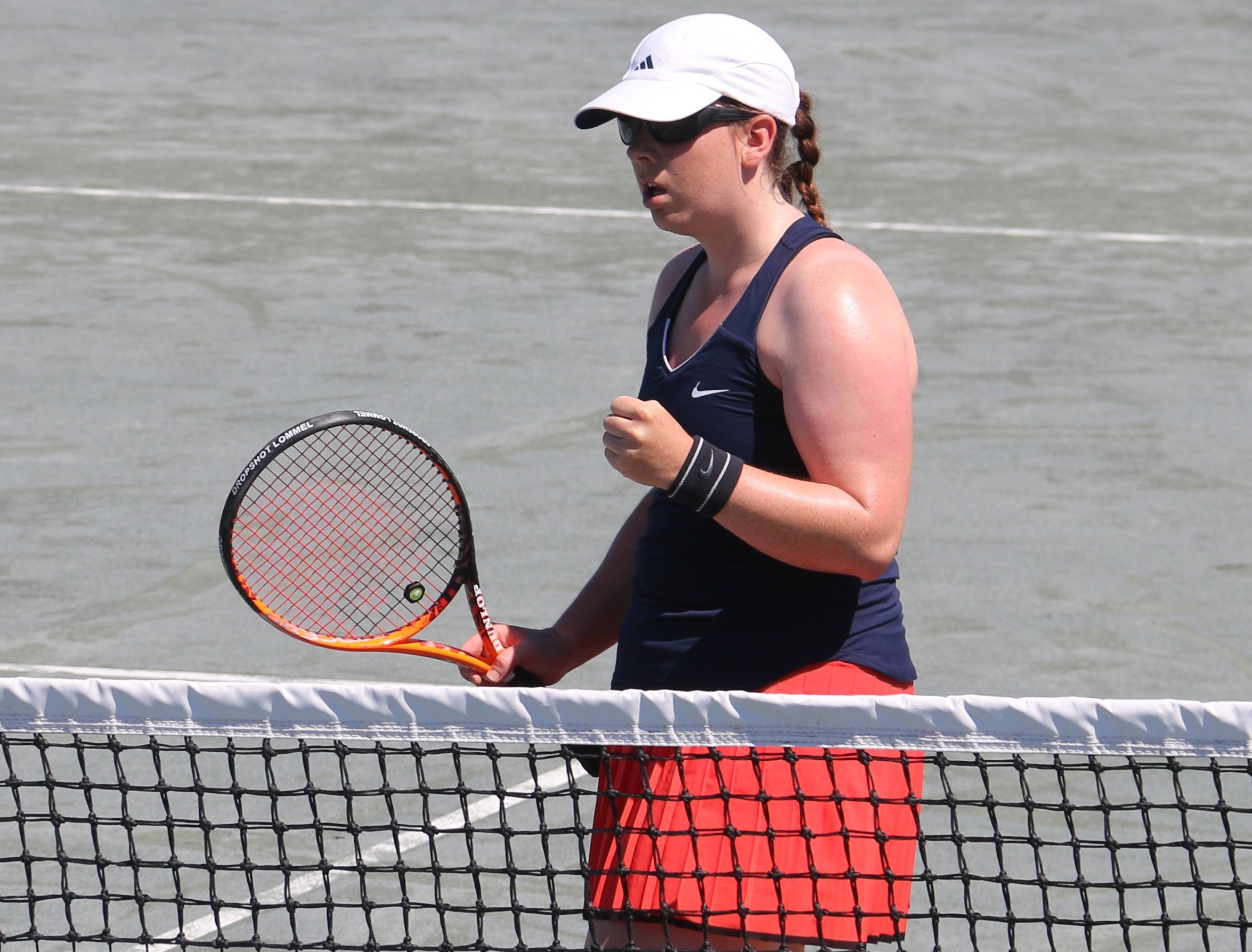
Graham’s impressive record features three World Championships titles, including one from the Global Games which also act as the Worlds for tennis. In addition he is a five-time national champion.

Unbeaten since his maiden title from the Global Games in Guayaquil, Ecuador, in 2015, Graham is excited about attempting to defend his gold medal at home:

“The home territory makes it more easier for me because it’s around where all my friends are, and supporters will be just buzzing there. I hope to be the Australian team again and just keep winning at the top level.”

Before Brisbane 2019, Graham will compete at the 2018 World Intellectual Impairment Sport Tennis World Championships in Paris, France, in July. The competition is being held as part of the World Intellectual Impairment Sport European Summer Games.

Currently training six hours a day for six days a week, Graham is feeling good about his chances in Paris.

“I’m very confident that I will retain my title for the fourth straight time because I have nothing to lose and I can just go out there, give it my all and just do my thing and just do my best,” he said.

But the Australian is also aware that new players are emerging all the time. He believes his attitude will be the key to success and having confidence in all elements of his game.

“Truth be told, and this is the way I see it, anyone can beat me because I always go into a match thinking it’s going to be tough,” he said. “If I don’t have the right attitude they could beat me if my game is off and that’s the sort of mindset I have before a match – thinking that it’s going to be tough.

“My whole game, basically everything about my game, would be strong because I possess an all court game and I have all the weapons necessary to win matches.”

So what is the secret to Graham’s success?

“There’s really no secret about it. I just train hard, put in the work and that delivers the results for me. It’s great.”

About the 2019 Global Games

The Global Games will feature athletics, basketball, swimming, table tennis, futsal, indoor and outdoor rowing, road cycling, taekwondo and tennis. Competition runs from 11-20 October.

The event always takes place in the year ahead of the Paralympic Games. Many medallists have used the Global Games as a springboard, going onto make the podium at the Paralympics. For those athletes competing in non-Paralympic sports it is the highest level they can reach.

More information is available at the World Intellectual Impairment Sport Global Games page of inas.org.

The World Intellectual Impairment Sport Sports and Regions Councils will gather delegates from around the world

First World Intellectual Impairment Sport Sports and Regions Councils to take place

The International Federation for Athletes with Intellectual Impairments (World Intellectual Impairment Sport) will hold the first meetings of its Sports and Regions Councils in Paris, France, during the 2018 World Intellectual Impairment Sport European Summer Games in July.

A new innovation, delegates will be welcomed from across the 14 sports on the World Intellectual Impairment Sport programme. All five World Intellectual Impairment Sport regions – Asia, Oceania, Africa, Americas and Europe – are also invited.

World Intellectual Impairment Sport President Marc Truffaut explained what he hopes can be achieved in Paris: “The idea behind the World Intellectual Impairment Sport Sports and Regions Councils is to share knowledge and best practice between countries and regions.

“Our strategic aims include delivering world class events and sports development as well as increasing our organisational capacity. Building upon the progress already made to develop sports committees and the constitutional changes agreed at the 2017 General Assembly, this is a moment in time which cannot be missed.”

On the agenda

The main focus of the World Intellectual Impairment Sport Sports Council will be competition management and delivery. The agenda will focus on all elements of a successful event but particularly those off the field of play.

“We need to push for the next level and start to work closer with organisers on the things that make competitions really special. These include media and marketing, ticketing, protocol and ceremonies and many more.

“There will also be a special focus on anti-doping and the importance of educating athletes and teams on their responsibilities.”

For the Regions Council the subject of constitutional changes and the relationship with World Intellectual Impairment Sport will be top of the agenda. The crucial role of development by regions of sports in their constituent countries will also be discussed. There will be a focus on getting everyone to develop sports not on the Paralympic programme.

The 2018 World Intellectual Impairment Sport European Summer Games are being organised by World Intellectual Impairment Sport Europe and will feature eight sports between 14-22 July.

Cycling and tennis is open to athletes outside of the region. Those competitions will act as the World Championships for those sports in 2018.

Image credit: Getty

Registration opens for World Intellectual Impairment Sport Eligibility Conference

Delegates can now register for the third International Federation for Athletes with Intellectual Impairments (World Intellectual Impairment Sport) Eligibility Conference being held in Paris, France, from 18-19 July.

Aimed at National Eligibility Officers (NEOs) but open to anyone with an interest in the area, the conference coincides with the 2018 World Intellectual Impairment Sport European Summer Games.

Professor Jan Burns MBE, World Intellectual Impairment Sport Head of Eligibility, encouraged members to get involved:

“As part of our strategic goal to develop a gold standard for athlete eligibility, we are planning what we hope will be a useful and insightful programme for the conference. We believe it is a great chance to share best practice and help to build a stronger system in the future.

“By inviting all NEOs and anyone else who has an interest, we are aiming to build on the two previous editions. These helped deliver real improvements because we were able to deliver education face-to-face, and openly discuss the challenges and benefits experienced at a national level.

“I am looking forward to welcoming delegates to Paris in July for yet another great World Intellectual Impairment Sport Eligibility Conference.”

The programme will include:

– An update on eligibility from World Intellectual Impairment Sport Executive Director Nick Parr

– A session on the latest research findings in the trial eligibility groups. These are II2 (for athletes with a more significant impairment) and II3 (for athletes with autism)

– A presentation from KU Leuven University, Belgium, on classification research

– Information about the Intellectual Disability and Equal Opportunities for Active and Long-term Participation in Sport (IDEAL) project being run in Europe

– A workshop on eligibility and a question and answer session

Registration closes on 20 June.

The 2018 World Intellectual Impairment Sport European Summer Games are being organised by World Intellectual Impairment Sport Europe and will feature eight sports between 14-22 July.

Cycling and tennis is open to athletes outside of the region. Those competitions will act as the World Championships for those sports in 2018.

About eligibility

To be considered eligible to compete, athletes must meet the eligibility criteria as defined by World Intellectual Impairment Sport. These are based upon the World Health Organisation and American Association on Intellectual and Developmental Disabilities (AAIDD) research and guidance.

Eligibility is applied for through the World Intellectual Impairment Sport member in a country. All World Intellectual Impairment Sport members have an NEO whose job it is to provide World Intellectual Impairment Sport with evidence of the athlete’s impairment.


Basketball Australia names head coaches for 2019 World Intellectual Impairment Sport Global Games

Basketball Australia names head coaches for 2019 World Intellectual Impairment Sport Global Games

By Basketball Australia

Image credit: Hamish Patterson

Basketball Australia has announced the head coaches of the Australian Pearls and Boomerangs, the national teams for female and male athletes with an intellectual impairment, as they prepare to lead them at the 2019 World Intellectual Impairment Sport Global Games in Brisbane from 9-20 October.

Dr. Julia Walsh, a senior lecturer in sport coaching at Deakin University, will take over the head coaching role for the Australian Boomerangs.

Walsh has extensive coaching experience from community level through to leading high-performance programmes of both genders and her desire and commitment to the disability sport sector is reflected in her involvement with the Ivor Burge championships.

“I am proud to take on the role of serving Basketball Australia and the current and future Boomerangs,” said Walsh.

“I stand on the shoulder of giants, coaches and players who have progressed the game for athletes with an intellectual impairment and in particular Peter Corr and Simon Robinson and their coaching teams who provided the solid foundation and connections made in the local and international basketball community.”

Basketball Australia thanks Simon Robertson for his contribution to the programme over the past six years as the former Head Coach.

Larry Davidson will return as head coach of the Pearls, having led the team to the world title in November last year in Loano, Italy, in the 3v3 format.

“I am thrilled to be given the task of preparing and guiding the athletes in the programme to strive to excel in the Global Games next year,” said Davidson.

“The depth of talent available is exciting and in the next month we will be selecting a squad to attend a camp in late July /early August. Playing an international event of this nature on home soil will be wonderful for the athletes and their families.”

Robyn Smith, Chief Executive Officer of Sport Inclusion Australia, added: “Sport Inclusion Australia is delighted with its partnership with Basketball Australia and the opportunity to focus on the Boomerangs and Pearls national programmes in readiness for the World Intellectual Impairment Sport Global Games in October 2019 in Brisbane.

“We know both teams will represent Australia with distinction and we congratulate the coaching staff on their appointments and wish them well in their endeavours.”

Basketball Australia, in consultation with both head coaches, is now seeking expressions of interest for Assistant Coaches for both programs. Find out more information here.

About the World Intellectual Impairment Sport Global Games

The 2019 International Federation for Athletes with Intellectual Impairments (World Intellectual Impairment Sport) Global Games are the world’s biggest high performance sports event for athletes with an intellectual impairment.

Featuring nine sports, more than 1,000 athletes are expected to travel to Brisbane just under one year ahead of the Tokyo 2020 Paralympic Games. The sports contested are athletics, swimming, table tennis, rowing, basketball, futsal, tennis and cycling.

The host nation are expected to be strong, continuing their Global Games record where they have finished on top of the medals table at every edition since 2009.

Around 30 psychologists gathered in Cairo as Egypt focuses on athlete eligibility

Egypt focuses on athlete eligibility through workshop

Around 30 psychologists attended an athlete eligibility workshop run by the International Federation for Athletes with Intellectual Impairments (World Intellectual Impairment Sport) in Cairo, Egypt, between 27-28 April.

Professor Jan Burn MBE, World Intellectual Impairment Sport Head of Eligibility, delivered the session to train the group in the basics, including an introduction to the organisation, the differences between eligibility and classification, how World Intellectual Impairment Sport defines its criteria for athletes and the process for registering competitors.

The National Eligibility Officer (NEO), Hoda Mohamedy, also joined the workshop which saw both qualified and trainee psychologists attend. Each World Intellectual Impairment Sport member must have an NEO who is responsible for ensuring that athletes meet the eligibility criteria before an application is submitted to the World Intellectual Impairment Sport Eligibility Panel. They must be a qualified psychologist and are supported by a group of other professionals.

“I really enjoyed working with the Egyptian psychologists, they were very enthusiastic to learn about the eligibility processes and how they can ensure that they implement robust systems,” Burns said. “They were particularly keen to learn about the new groups (II2 and II3) and how athletes with Down syndrome can be included. It was also encouraging that so many psychologists in training wanted to get involved in this early stage of their career.

“The attendees of the workshop feedback was that they enjoyed the event and now felt much more knowledgeable.”

The II2 and II3 groups are for athletes with a more significant impairment and for athletes with high-functioning autism, respectively. World Intellectual Impairment Sport introduced these groups in 2017, both as trials, which will continue into the future while further research is carried out.

Art and culture mix with business with pleasure

The workshop was hosted by ESFID, the World Intellectual Impairment Sport member for Egypt, following the World Intellectual Impairment Sport Governing Board meeting in the previous month. It also coincided with an international exhibition of art from people with impairments.

“The facilities and arrangements were excellent, so many thanks to ESFID and the rest of the team,” Burns continued. “The workshop was one of a number of events happening as part of the 2nd Awladna International Forum for Arts of the Gifted, which had 30 nations attending, so it was fantastic to see so many people with disabilities from around the world, and their art.”