
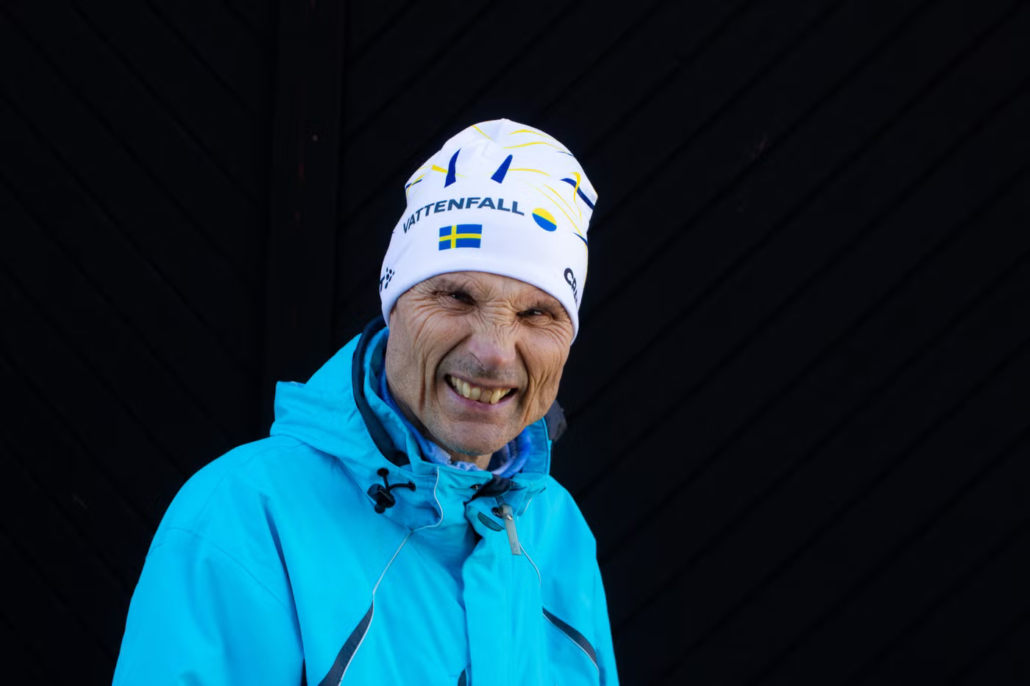
Nils-Peter Kling: A Pioneer of Winter Paralympic Inclusion
When Nils-Peter Kling crossed the finish line at the 1994 Winter Paralympics in Lillehammer, he did more than complete a race – gold in cross-country skiing in the category for athletes with an intellectual impairment. Although it was a demonstration event, the victory showed the world that athletes with intellectual impairment belong at the highest level of Paralympic sport.
Representing Sweden in cross-country skiing, Kling competed in demonstration events and delivered a standout performance in the event helping pave the way for elite competition for athletes with intellectual disabilities.
Competing on the Paralympic Stage
Four years later, Kling competed at the 1998 Winter Paralympic Games in Nagano, Japan, where cross-country skiing events for athletes with intellectual impairment were officially included in the programme.
Representing Sweden, Kling finished:
- 9th in the 5 km Classical
- 8th in the 15 km Free
- 8th in the 20 km Classical
His participation formed part of a generation of athletes who demonstrated that athletes with intellectual impairment could compete internationally in winter para sport.
The 1998 Nagano Winter Paralympics marked an important and historical moment that is often overlooked – Cross-country skiing events for athletes with intellectual impairment were included as official medal events in the programme. Winter Paralympics competition for athletes with an intellectual impairment is not a new concept – it has already existed within the Paralympic Games. More than 30 years later, athletes with an intellectual impairment are still waiting for their return to the Winter Paralympic Games.
As for Kling, he is remembered as an outstanding athlete and teammate. His achievements and contributions to sport were recognised in 2023 when he was inducted into the Parasport Sweden Hall of Fame by the Swedish Parasport Federation. His story, like many athletes with a disability, speaks to the power of sport in helping people overcome adversity.
A Life Shaped by Resilience
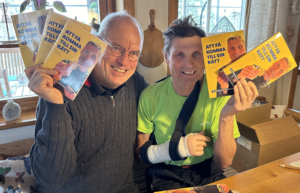
Anders Hanssons and Nils Kling posing with Nils autobiography book. Photo Credit: Anders
Long before Lillehammer, Kling’s life had already been shaped by challenges.
In the early 1980s, Swedish journalist Anders Hansson first met Kling. Known affectionately as “Klingen,” he was energetic, talkative and deeply passionate about skiing.
Despite the difficulties he faced growing up, Kling was known for his warm personality and eagerness to connect with others.
Hansson, who worked for the newspaper Falu Kuriren, wrote several articles about Kling, particularly his remarkable performance at Lillehammer in 1994. When Kling returned to his hometown of Falun following the Games, the community celebrated his achievement.
But the path to that moment had not been easy.
In later interviews, Gun Lindén – a caregiver and foster parent figure in Sweden who became closely involved in Kling’s life during his youth – described how Kling had spent part of his childhood in an institution in Hedemora. His life changed when Lindén welcomed him into her family. With her encouragement and support, Kling discovered skiing – and a passion that would shape the rest of his life.
Their relationship became a lifelong friendship and laid the foundation for Kling’s sporting journey.
Inspired by Kling’s resilience, Hansson later wrote a book telling his story. The book explores not only Kling’s sporting achievements but also the broader history of institutionalisation and the challenges faced by people with intellectual disabilities.
At its heart is a simple but powerful question:
Instead of asking “What can’t they do?”, society should ask “What can they do?”
The book is available for purchase at Adlibis. www.adlibris.se
A Legacy That Calls for Change
Kling’s story represents more than a personal achievement. It represents a generation of athletes who helped prove that athletes with an intellectual impairment belong in high-performance and Paralympic sport.
At the 1994 Lillehammer Winter Paralympics, Nordic skiing for athletes with an intellectual impairment was included as a demonstration event. By the 1998 Nagano Paralympic Winter Games, cross-country skiing events for athletes with an intellectual impairment were officially added to the programme.
However, following dishonest actions by a small number of individuals at the Sydney 2000 Paralympics, athletes with an intellectual impairment were removed from the Paralympic Games.
Although athletes with an intellectual impairment returned to the Summer Paralympics in London 2012, they are still not included in the Winter Paralympic Games today.
This leaves out talented athletes without the opportunity to compete on the Paralympic stage in winter sports.
Looking forward
Virtus continues to campaign for greater inclusion of athletes with intellectual impairment.
Efforts are underway to expand opportunities for athletes with intellectual impairment in winter sports and to introduce medal events for athletes with an intellectual impairment at the next Winter Paralympic Games.
Recent developments offer hope. French officials have expressed support for including athletes with intellectual impairment at the 2030 Winter Paralympic Games, and Virtus is in direct discussion with the International Ski and Snowboard Federation (FIS). Both organisations have also signed an MOU to advance inclusion in winter sports last year.
But the journey is not finished.
The re-inclusion effort will continue until athletes with intellectual impairment once again compete at the Winter Paralympic Games, standing alongside athletes with physical and visual impairments as equal members of the Paralympic movement.
As Virtus celebrates its 40th anniversary, we honour the legacy of pioneers like Nils-Peter Kling, whose dedication helped shape opportunities for athletes with an intellectual impairment. This journey reflects our shared belief in fairness, inclusion, and opportunity, and our determination to restore the place that athletes with an intellectual impairment have already proven they deserve.


