World Intellectual Impairment Sport searches for Championships hosts

World Intellectual Impairment Sport searches for Championships hosts in seven sports

The International Federation for Athletes with Intellectual Impairments (World Intellectual Impairment Sport) has launched a search for hosts of major Championships in athletics, rowing, football, table tennis, swimming and alpine and Nordic skiing until 2021.

Competitions in Europe, Asia and the Americas in athletics and swimming highlight the list as World Intellectual Impairment Sport looks to expand its regional calendar.

Later this year Santiago del Estero will become the first city to stage the World Intellectual Impairment Sport Swimming Championships (Americas) between 29 August – 2 September. The event will be the first competition in any World Intellectual Impairment Sport sport to be hosted in the region and marks the start of a wider campaign for other sports.

Hosts are wanted for the 2018 World Intellectual Impairment Sport Athletics Championships (Asia) and the 2020 editions for Europe, Asia and the Americas. Football and table tennis are searching for bids from countries in Asia and the Americas for their regional Championships.

The 2020 indoor athletics, half marathon, alpine and Nordic skiing and indoor rowing World Championships are also on offer.

Marc Truffaut, World Intellectual Impairment Sport President, said: “In 2018 we are really getting our plans to create an ambitious, more diverse competition calendar underway. It will give the world’s best athletes with intellectual impairments the chance to compete more often at the highest levels.

“We are also opening up the bidding process much earlier so we can secure hosts at least two years before in some cases. This will allow us to work with organisers more effectively, raise the standards of our competitions and provide an all-round high quality experience for everyone involved.

“Hosting an World Intellectual Impairment Sport competition is a very important responsibility. For some athletes it will be the highest level they may compete at and for others it could be their chance to qualify for a Paralympic Games. It is hugely important that we get everything right and we are here to guide and advise organisers at every step of the way.”

Information for organisers

In total, World Intellectual Impairment Sport is looking for hosts for 20 major events between 2018-2021. A full list of competitions, alongside bid documents and deadlines, can be found on the World Intellectual Impairment Sport website.

Bid must meet the specifications for each sport which can be found here.

World Intellectual Impairment Sport is also looking for hosts for the 2023 edition of the Global Games – the world’s biggest high performance sports event for athletes with intellectual impairments.

2018 World Intellectual Impairment Sport World Football Championships group draw

Groups drawn for 2018 World Intellectual Impairment Sport World Football Championships

The group draw for the 2018 International Federation for Athletes with Intellectual Impairments was held in host city Karlstad in Sweden on Friday (20 April).

Hosted by ex-national midfielder Stefan Schwarz, the draw saw eight teams and the opening fixture decided.

Hosts Sweden will play Germany in their opening match. They are joined by South Africa and France in group A.

Group B is made up of defending champions Saudi Arabia, European title holders Poland, Japan and Russia.

Schwarz, who is also an ambassador for Karlstad 2018, said: “The draw is amazing because it’s quality games, all of it, and it’s the top nations in the world. It’s going to be very competitive games. Everyone must prepare in the best way because there is no opportunity for mistakes.

“It will hopefully be a football festival as well because at that time of year, Tingvalla is a fantastic place. I hope with the nice weather and nature around as well will bring a lot of football fans to participate to give the teams the support they need.”

On the morning of the draw Schwarz also went to check-out the Swedish team’s preparations at a training session.

“We are only in April so there is still four or five months to develop and get better as a team. What I saw today was amazing, high quality, a lot of skills,” he said of the national team. “But what most impressed me was their play on the big open field. The timing, the change of position, the depth, was very impressive. How they work as a unit together. They are looking good, looking strong, it’s a couple months still to improve.”

Karlstad 2018 will take place from 5-18 August.

Players will get to experience five stadiums across four different cities – Karlstad, Kil, Arvika and Kristinehamm.

In Karlstad the Tingvalla idrottsplats and Orsholmen’s idrottsplats will host group matches.

Group matches will also be held in Sannerudsvallen, Solviksvallen and Sannaheden stadiums in Kil, Arvika and Kristinehamm respectively.

The semi-finals will be held on 14 August at Tingvalla as well as the third place game and final on 18 August.

One more team, Argentina, may also compete. A separate draw for which group they will join will be held once the team have confirmed their participation. World Intellectual Impairment Sport and the organisers want to give as many teams as possible the chance to take part in this event.

Stefan Schwarz to draw teams for 2018 World Intellectual Impairment Sport World Football Championships

Sweden’s former midfielder Stefan Schwarz will carry out the draw for the 2018 International Federation for Athletes with Intellectual Impairments (World Intellectual Impairment Sport) World Football Championships in host city Karlstad on Friday (20 April).

The draw will be shown live at World Intellectual Impairment Sport Youtube channel from 3pm (CEST).

Eight teams including hosts Sweden, Argentina, France, European title holders Poland, defending champions Saudi Arabia, Japan and Russia will go into the draw for the competition being held from 5-18 August.

They will be separated into two groups with the top two teams from each advancing to the semi-finals.

Players will get to experience five stadiums across four different cities in Sweden – Karlstad, Kil, Arvika and Kristinehamm.

In Karlstad the Tingvalla idrottsplats and Orsholmen’s idrottsplats will host group matches.

Group matches will also be held in Sannerudsvallen, Solviksvallen and Sannaheden stadiums in Kil, Arvika and Kristinehamm respectively.

The semi-finals will be held on 14 August at Tingvalla. The third place game and final take place in the same stadium on 18 August.

Sweden will get to kick-off the Championships in the opening game, also at Tingvalla, on 5 August.

Schwarz is not the first high profile Swedish player to lend his support to football for players with intellectual impairments.

For the last World Championships in Sao Paulo in 2014 striker Zlatan Ibrahimović paid for the Swedish men’s team’s travel to Brazil.

Second World Intellectual Impairment Sport Para Equestrian video competition to be held

The International Federation for Athletes with Intellectual Impairments has announced that the second World Intellectual Impairment Sport Para Equestrian video competition will be held in 2018, in the latest phase of the sport’s development.

Following the success of the first competition held in the innovative video format in 2017, countries have until 7 October to submit their entries.

Last year 14 riders from four countries were filmed completing the Grade IV Novice A test. Russia’s Ekaterina Kirienkova was crowned the winner on her horse Lady Lux.

In 2018 World Intellectual Impairment Sport is hoping for even more entries.

Uta Rindfleisch, who is leading the development of Para Equestrian for athletes with intellectual impairments, said: “The first video competition was very much a trial to see what interest is out there for the sport. We were pleased to have four countries taking part and the standard was very high.

“This year we are encouraging even more entries. We know that there are riders in a lot of countries but they may not have the funding to be able to travel to events. That is why we are running the competition in a video format, to make taking part as simple as possible.”

The 2nd World Intellectual Impairment Sport Para Equestrian Video Competition is open to World Intellectual Impairment Sport members and non-member countries to aid the development of Para Equestrian for athletes with intellectual impairments.

Horses are required to wear bandages to indicate that the test has not been performed and judged at another competition. Tests will be assessed and scored by a panel of International Federation for Equestrian Sport (FEI) Para Equestrian judges.

About World Intellectual Impairment Sport Para Equestrian

Equestrian was added to the World Intellectual Impairment Sport sport programme in 2016 in the form of dressage. The organisation wants to offer the best riders with intellectual impairments the chance to compete regularly.

More information about the sport, including the rules and history, can be found at the World Intellectual Impairment Sport Para Equestrian page.

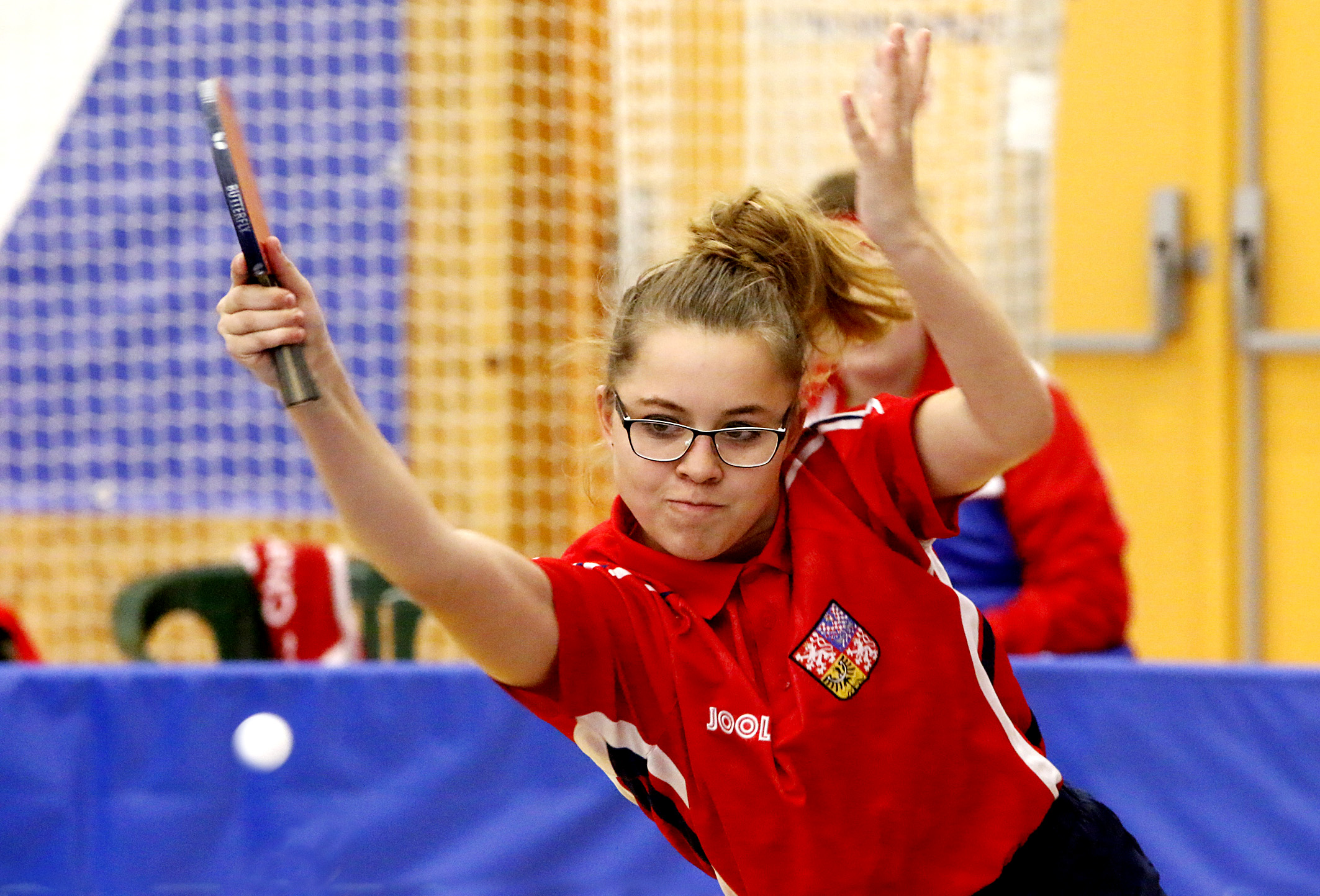
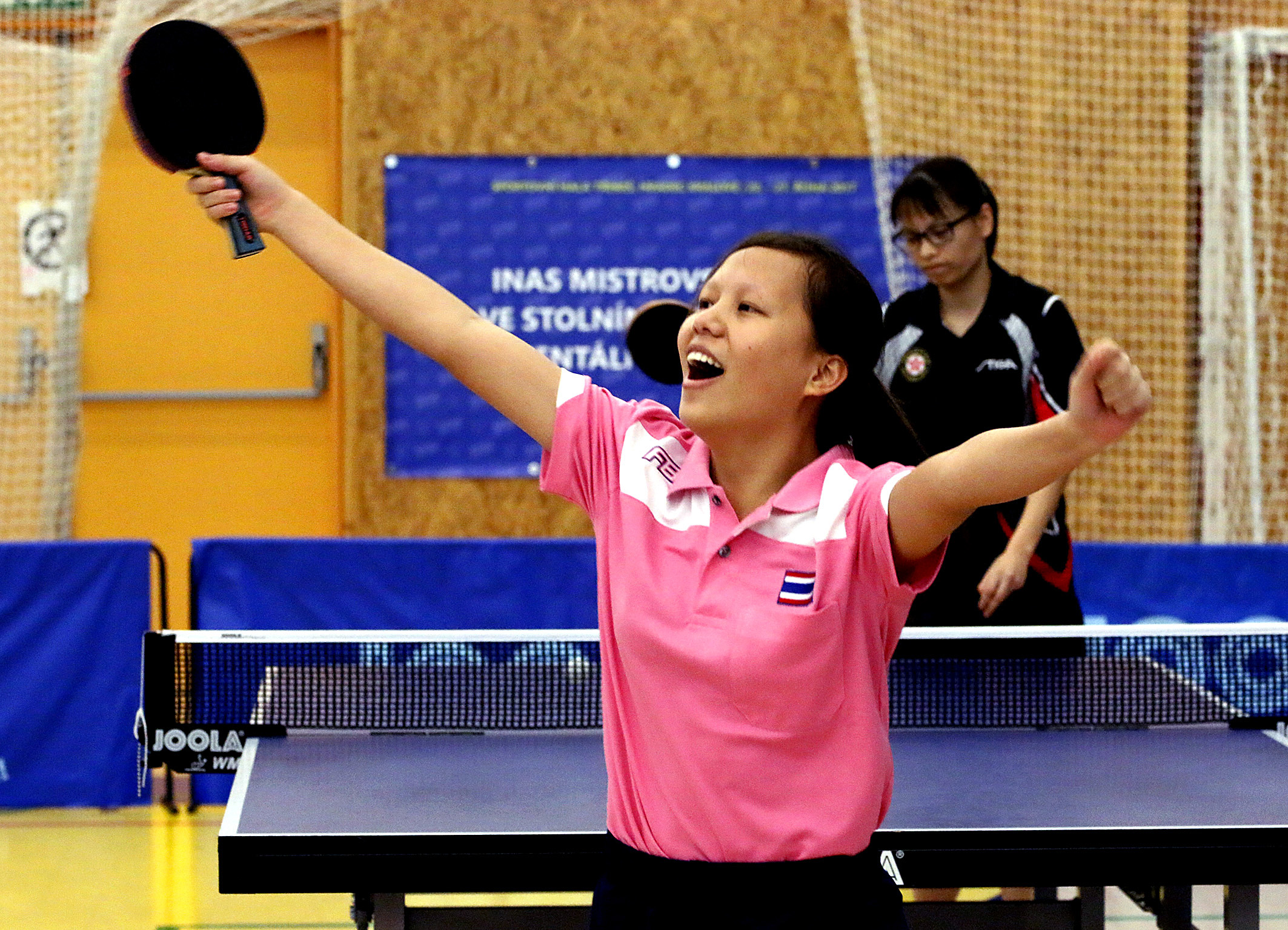
A table tennis player with an intellectual impairment

What is an intellectual impairment?

Sport for athletes with an intellectual impairment can sometimes be confusing for onlookers.

Some ask ‘why do people who are able bodied get to compete at the Paralympic Games?’ or ‘why does there need to be separate competitions for these athletes?’

The simple answer is that there are many adaptations athletes with intellectual impairments need to make in both training and competitions.

So in order to create a level playing field, like other athletes with impairments, they must meet a certain criteria and compete against others who have a similar level of functioning.

“In basic terms an intellectual impairment means that a person finds it harder to learn, understand and communicate. This has a significant impact on their abilities within sports,” Jan Burns, World Intellectual Impairment Sport’ Head of Eligibility and resident expert, said.

“Things which able-bodied athletes consider routine, such as race tactics, pacing or learning where the best take-off point is for jumps, are harder to for athletes with intellectual impairments.

“For example in a 10,000m race you would ideally want to save yourself for the final few laps. But athletes with intellectual impairments may not be able to manage and adjust to a consistent pace and to resist the impulse of setting an early high pace if the runner beside them sets off fast.

“It also extends to training – if you find it harder to learn from any mistakes or remember what your coach has told you, by the time you get to the track, field or pool you might not be as prepared as someone who can.”

So who decides who is eligible to compete?

There are 14 sports on the World Intellectual Impairment Sport programme. Athletes can compete at the Paralympic Games in three of these – athletics, swimming and table tennis.

For the Paralympic sports there is a two-step process. The first is know as ‘eligibility’. This stage is managed by World Intellectual Impairment Sport and means that an athlete has an eligible impairment.

“We used the World Health Organisation definition to create criteria within which athletes are considered eligible to compete,” Burns explained. “These include an IQ of 75 or less, significant limitations in adaptive behaviour in social and practical situations and the impairments must have been diagnosed before the age of 18.”

Countries submit psychological assessments and other paperwork to World Intellectual Impairment Sport which they think shows that an athlete meets the criteria. These are then assessed by the World Intellectual Impairment Sport Eligibility Panel – made up of a group of expert psychologists from around the world.

Athletes with intellectual impairments compete in the II1 group at World Intellectual Impairment Sport competitions. This is also known as S14 in swimming, T/F20 for athletics and class 11 in table tennis.

For those three sports, once an athlete is found eligible by World Intellectual Impairment Sport, they must then be classified by the relevant International Federation (World Para Athletics, World Para Swimming and the International Table Tennis Federation). Classification determines whether or not an athlete’s impairment affects their sport performance in that particular sport.

“In the other sports not on the Paralympic programme, World Intellectual Impairment Sport uses eligibility to determine whether they can compete,” Burns explained. “We are developing classification systems in other sports, like basketball, but there is a huge amount of research that needs to be done to make them specific to each sport.”

“I think it’s quite incredible how athletes with intellectual impairments compete,” Burns said. “When you think about how hard they have to work mentally just to tune in to the most basic of athletic instincts, it’s so impressive.”

World Intellectual Impairment Sport also has eligibility groups for athletes that include other impairments, such as Down syndrome and autism. More information on all the groups can be found on the World Intellectual Impairment Sport eligibility and classification pages.


World Intellectual Impairment Sport Governing Board meets in Cairo

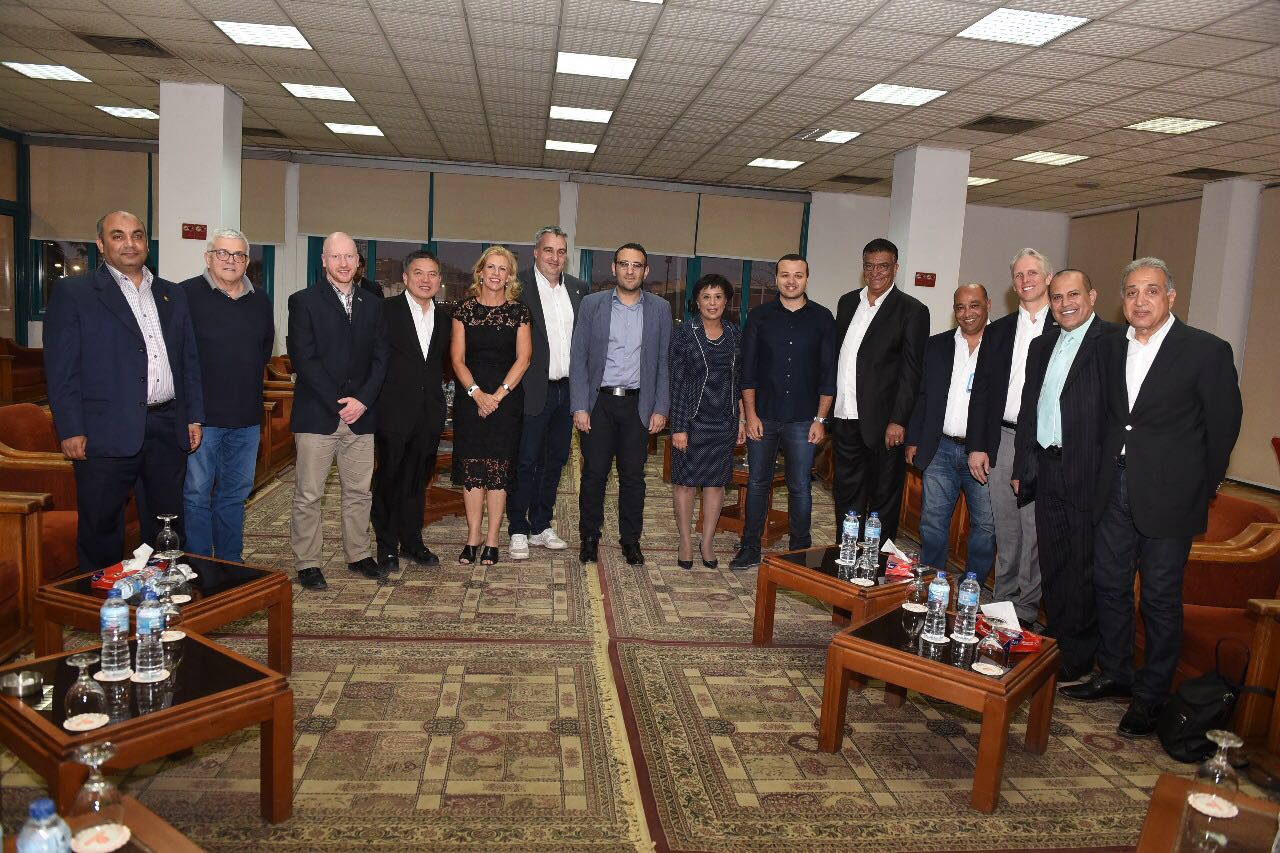
The International Federation for Athletes with Intellectual Impairments (World Intellectual Impairment Sport) Governing Board gathered for their first meeting of 2018 in Cairo, Egypt, between 21-22 March.

During the meeting, hosted by World Intellectual Impairment Sport Egypt member ESFID, a number of key items were agreed, setting-up 2018 as another year of progress.

The board have agreed to create a Neutral Athlete Policy to allow the participation of athletes from countries with no member organisation to compete at World Intellectual Impairment Sport competitions in exceptional circumstances. The full policy will be developed and published in the coming months.

The group also reviewed the progress of the project to introduce additional eligibility groups in World Intellectual Impairment Sport competition.

The trial groups – II2 for athletes with more significant impairments and II3 for athletes with high-functioning autism – were introduced in 2017 at the swimming and table tennis Championships.

Following the further inclusion of II2 and II3 medal events at the World Intellectual Impairment Sport Indoor Athletics Championships and World Intellectual Impairment Sport World Alpine and Nordic Skiing Championships in early 2018, it was agreed to continue with the trial. II2 has initially been limited to athletes with Down syndrome but research is underway regarding expanding the group to athletes who have an intellectual together with a further impairments.

From a strategic perspective the board discussed the World Intellectual Impairment Sport events programme and how competitions can be improved from an athlete and stakeholder perspective. This included the role of the sports committees and the Official Representative – the Governing Board member assigned to each event. The ideas put forward will be discussed at the Sports Council meeting in July.

The annual accounts for 2017 were presented and approved, and these have now been published in the Annual Report.

The first quarter management accounts for 2018 were also discussed alongside the need to generate more income through partnerships and fundraising. Projects such as #WeAreSport and the new World Intellectual Impairment Sport Global Athlete Foundation have seen early success but more work is required to support other initiatives.

Revisions were agreed to a number of policies and provisions which follows on from governance changes agreed at the 2017 General Assembly.

Suspensions of World Intellectual Impairment Sport Members in Indonesia and Great Britain were lifted and the Confederation Internationale Francophone Sport Adapté Culture (CIFSAC) was added as a provisional member. If formally approved at General Assembly, CIFSAC will be the second member in the International Federation category alongside World Taekwondo.

A number of appointments to sub-committees were also signed off. Catherine Fayollet (FRA) was confirmed as chairperson of the World Intellectual Impairment Sport Medical Committee and Dave Harman (ECU) has been appointed to the World Intellectual Impairment Sport Global Games Committee.

A reorganisation of the Anti-Doping Committee is also currently being implemented to ensure greater accountability and focus on individuals strengths/experience.

Finally updates were received on the planning and delivery of the 2019 World Intellectual Impairment Sport Global Games in Brisbane, Australia. Reviews were also undertaken of the 2017 World Intellectual Impairment Sport Swimming Championships, indoor athletics and alpine and Nordic skiing.

The next World Intellectual Impairment Sport Governing Board meeting will take place in Madrid, Spain, in September.

Santiago del Estero

World Intellectual Impairment Sport expects Santiago del Estero swimming Championships will break new ground

The International Federation for Athletes with Intellectual Impairments (World Intellectual Impairment Sport) is confident that the 2018 World Intellectual Impairment Sport Swimming Open Championships (Americas) in Santiago del Estero, Argentina, will set the standard for future events.

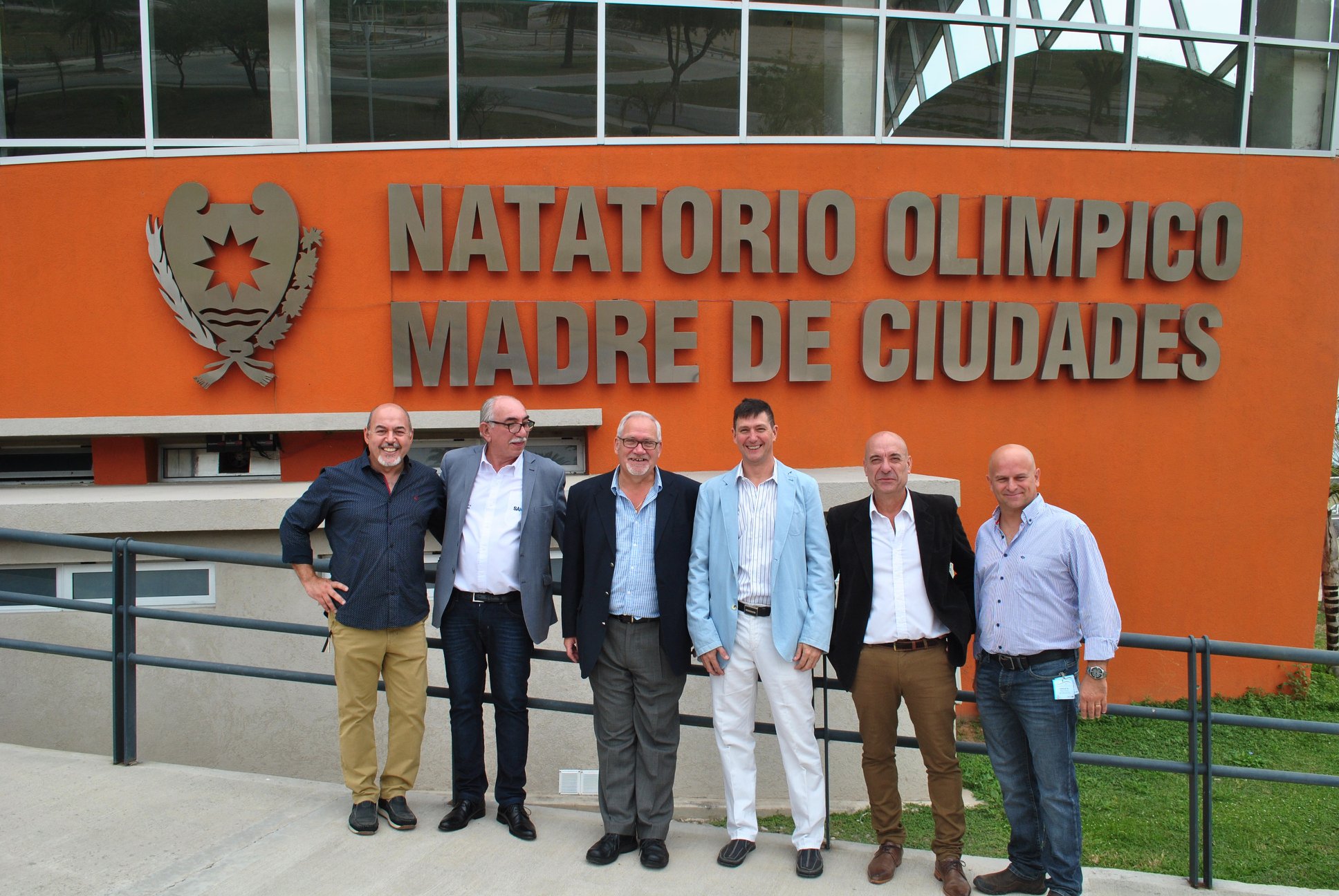
A site visit by World Intellectual Impairment Sport Swimming Committee Chairperson Dave Harman took place between 19-23 March. Harman was shown around the venue and was introduced to a variety of dignitaries from local and state government. He also met key personnel from the Local Organising Committee (LOC) and National Federation.

The media launch was also held during the four day visit.

“I have returned from Argentina with great confidence that Santiago del Estero has the potential to raise the bar for our swimming Championships, led by the Argentina Federation for Sports for People with Intellectual Impairments [FADDIM],” Harman said.

“I am very impressed with the newly built venue, Madre de Ciudades, but I was also introduced to a range of people who demonstrated a clear commitment to staging an excellent event.

“I was struck by the enthusiasm from the National Swimming Federation, from the clear interest of the State Governor, Dr. Gerardo Zamora, and the positivity of the Chief of the State Cabinet and the various ministers I met. This kind of support is unprecedented but crucial to the success and reach of the competition.

Progress in Americas as Argentina to host first swimming Championships

“The work that Technical Manager Patricio Ramallo, Argentinian Swimming Confederation Secretary Sergio Antonini and Aquatic Complex Director Professor Claudio Mentenego have already considered and put into place reassures me that theses Championships will be yet another milestone in the rising quality of World Intellectual Impairment Sport Swimming events.

“My thanks must also go to Professor Carlos Dapello, the State Secretary of Sport, Professor Franco Petta, the President of FADDIM, Professor Gabriela Viglino and Dr. Julian Britez for their work towards Santiago del Estero 2018. There is a great deal of experience of organising major international events within the group which I am sure will provide huge benefits.”

Harman discussed a variety of topics with the LOC and their supporters including logistics, transport, media and marketing, accommodation and broadcast. Organisers have committed to livestreaming the competition, the plans for which will be reviewed over the coming months.

About Santiago del Estero

The competition, which runs from 29 August – 2 September, is the first regional competition of its kind in any World Intellectual Impairment Sport sport in the Americas. Around 160 athletes from 10 countries are expected to compete. World Intellectual Impairment Sport has applied to World Para Swimming for sanctioning and classification.

Santiago del Estero 2018 is one of the last major events ahead of the 2019 World Intellectual Impairment Sport Global Games in Brisbane, Australia. The Games are the world’s biggest gathering of elite athletes with intellectual impairments. They will a;so be a major step on the road to the Tokyo 2020 Paralympic Games.

Progress in Americas as Argentina to host first swimming Championships

Progress in Americas as Argentina to host World Intellectual Impairment Sport swimming Championships

The International Federation for Athletes with Intellectual Impairments (World Intellectual Impairment Sport) has announced that Santiago del Estero, Argentina, will host the 2018 World Intellectual Impairment Sport Open Swimming Championships (Americas).

The competition, which will run from 29 August – 2 September, will be the first regional event of its kind for athletes with intellectual impairments in any World Intellectual Impairment Sport sport in the Americas.

Around 160 athletes from 10 countries will gather at the newly built Madre de Ciudades swimming pool.

World Intellectual Impairment Sport President Marc Truffaut said: “These Championships represent a huge step forward in the development of our swimming programme and is something we are working towards in other sports. With a solid World Championships programme in place, athletes now have another high-level competition to train for.

“It will help the development of the sport in the Americas, meeting our commitment to build our regional event programme. It will also help to improve the capacity of competition organisers, reflecting the fact that swimming is one of World Intellectual Impairment Sport’ biggest and most popular sports.

“The Local Organising Committee have shown a great commitment to hosting a successful event. Not only do they want to deliver a fantastic competition, they also want to focus on the bigger picture including promotional activities and the overall athlete experience. I am sure it will set the standard for the future.”

A word from the organisers

Santiago del Estero 2018 is being organised by the Argentina Federation for Sports for People with Intellectual Impairments (FADDIM). They will work with the national swimming federation on delivery of the competition. World Intellectual Impairment Sport have also applied for the competition to be recognised by World Para Swimming and for their classifiers to attend.

“FADDIM is getting prepared for an historic moment, when we will welcome great figures from the world of World Intellectual Impairment Sport swimming.  This will also be our first international swimming tournament,” Professor Franco Petta, President of FADDIM, said.

“We are taking huge pride in being able to organise such an important event, and above all, know the great responsibility when receiving young elite athletes who we hope achieve enriching experiences and can gain and share the values ​​of sport and life.

“We hope that this event will be also a great tool to raise awareness of the potential of people with intellectual impairments.

“We expect to receive here many countries from all over the world, from different religions and races. This will allow us to demonstrate once again, that the World Intellectual Impairment Sport movement is a great boost towards the inclusion of our athletes.

“This celebration of sport is a great dream of all the Argentines and we are sure that Argentina can be recognised by the world.

“I personally would like to thank those who are making a great effort to come along with us on our journey.”

Santiago del Estero 2018 will be one of the last major events ahead of the 2019 World Intellectual Impairment Sport Global Games in Brisbane, Australia. The Games are the world’s biggest gathering of elite athletes with intellectual impairments and will be a major step on the road to the Tokyo 2020 Paralympic Games.

First wave of #SportChampions announced to celebrate International Women’s Day

First wave of #SportChampions announced to celebrate International Women’s Day

To celebrate International Women’s Day on 8 March, the International Federation for Athletes with Intellectual Impairments (World Intellectual Impairment Sport) has announced the first athlete and administrator #SportChampions who will take part in its #WeAreSport project in 2018.

Through the programme, World Intellectual Impairment Sport aims to help female athletes to use social and other media to show their life as a high performance sportsperson. This will make them more visible and raise their profile so that they can become role models for the next generation.

In addition, the project will train administrators from World Intellectual Impairment Sport members in how to develop pathways to get more women and girls with intellectual impairments into sport.

So far South Korea, Argentina, Singapore, Hong Kong, Ecuador and Australia have officially signed up. The athletes nominated are some the brightest young stars from each country including Paralympians and World Intellectual Impairment Sport world champions.

Egypt, the USA, South Africa, France, Thailand, India and Sweden have also expressed an interest in taking part, and are going through the nomination process.

Applications are still open as World Intellectual Impairment Sport aims to recruit 20 athletes and the same number of administrators in total.

London 2012 Paralympic champion and Rio 2016 silver medallist Jessica-Jane Applegate will be the face of #WeAreSport.

As one of the world’s best swimmers, the 21-year-old is a great example of how female athletes can use social media to promote themselves. With nearly 50,000 followers across platforms such as Twitter, Instagram and Facebook, Applegate shares updates about her training and competitions and regularly engages with her fans.

Describing some of the challenges in sport for athletes with intellectual impairments, Applegate said:

“Getting into sport is easy but staying in sport is really hard. Anyone can turn up to a session and give it a go but what I found difficult was that I looked the same as everyone else so everyone else expected so much more from me.

“I couldn’t understand lots of the instructions and couldn’t communicate back how or what I didn’t understand. It takes me a lot longer to learn new things and unless you have support from your coaches and club members it’s a huge stress and struggle.

“Many clubs and coaches are trained now to support children just like me and it’s really important that we all have that equal opportunity to join in. There are not enough learning disabled girls in sports so there’s a huge gap in the competitions.

“I would love to see more girls competing and am happy to help any of them.”

Robyn Smith, World Intellectual Impairment Sport Vice President, said: “We are absolutely delighted to welcome the first athletes and administrators who will take part in #WeAreSport. It is so important that we give both groups the tools to develop themselves and sport for women and girls in their countries.

“Jessica-Jane has perfectly described some of the issues faced by countries in developing their programmes. This includes barriers unique to areas of sport for athletes with intellectual impairments, such as a lack of understanding around their needs. We also need more role models to inspire the next generation.

“The project aims to start to address the gender imbalance that exists across the world, both at the World Intellectual Impairment Sport and Paralympic level. In turn that will increase the depth of field at competitions and make our sports more competitive all-round.

“We know that it can be a challenge for countries to find ways of including athletes with intellectual impairments and for athletes to promote themselves. But these are obstacles worth overcoming and ones that we are firmly aiming to address.”

The first activities for #WeAreSport will take place in June 2018 including a training webinar for the athletes and administrators. Each athlete will also receive a specially designed media pack containing their biography, pictures and graphics they can share on social media.

The administrators will be given materials and guidance to help them attract female athletes to try sports. As part of their commitment they will deliver at least one development workshop in their country for women and girls.

The project is mainly focused on Asia, Oceania and Africa but athletes and personnel from other regions will also be included.

Activities will climax on the 2018 International Day of Sport for Athletes with Intellectual Impairments on 20 September.

#WeAreSport is supported by a grant from the Agitos Foundation, the development arm of the International Paralympic Committee. It is co-funded by Sport Inclusion Australia.

Confirmed athlete #SportChampions

Athlete Eligibility group Country Age Sport Career highlights
Moi Yan Ting Danielle II1/S14 Singapore 19 Swimming 2017 Asian Youth Para Games medallist (silver 100m butterfly, bronze 100m backstroke, 200m freestyle)
Melanie Fernandez II1/T20 Argentina 15 Athletics Participation in World Para Athletics Junior Championships
Jade Lucy II1/S14 Australia 21 Swimming World Intellectual Impairment Sport Global Games champion (100m, 400m, 800m, freestyle) and World Intellectual Impairment Sport world champion (200m, 400m and 1,500m freestyle)
Poleth Mendes II1/F20 Ecuador 22 Athletics Paralympian and silver medallist in shot put F20 at the 2017 World Para Athletics Championships
Yang Hee Seo


II1/class 11 South Korea 31 Table tennis 2014 Asian Para Games (bronze women’s singles)
Caitlyn Sharp II1 Australia 15 Athletics World Intellectual Impairment Sport world champion (high jump)
Wong Pui Kei II1/class 11 Hong Kong 20 Table tennis 2017 World Intellectual Impairment Sport World Table Tennis Championships (silver women’s doubles, bronze women’s singles, gold women’s team, gold junior doubles, gold junior team, silver junior singles)


Daniel Fox, Liam Schluter and Mitchell Kilduff will compete at Gold Coast 2018

Fox, Schluter, Kilduff named to Gold Coast 2018 Australia team

Image credit: Getty Images

By Swimming Australia and World Intellectual Impairment Sport

Australia’s Daniel Fox, Liam Schluter and Mitchell Kilduff will represent the hosts as part of a 70-strong swimming team for April’s 2018 Gold Coast Commonwealth Games.

The team was announced by Commonwealth Games Australia on the Gold Coast following the four-day Hancock Prospecting Australian Swimming Trials at the Optus Aquatic Centre.

Both athletes will compete in S14 events, for athletes with intellectual impairments.

Made up of 49 able-bodied swimmers and 21 Para-sport athletes, Queensland dominated team selection with 40, followed by New South Wales (10), Victoria (nine), Western Australia (six) and South Australia (five).

The two youngest members of the team are 13-year-old Jasmine Greenwood and 16-year-old Kaylee McKeown while the oldest members of the group are Holly Barratt and Matt Levy, 31.

Fox, Schluter and Kilduff share multiple titles between them. Fox is a Paralympic medallist from London 2012 and Rio 2016, as well as the defending Commonwealth Games champion in the men’s 200m freestyle S14.

Schluter won gold at the 2015 International Federation for Athletes with Intellectual Impairments (World Intellectual Impairment Sport) Global Games in the men’s 400m freestyle. He too is a Paralympian, making his debut at Rio 2016 with a best finish of fifth in the 200m freestyle.

Kilduff took home four gold medals from the 2011 Global Games in Liguria, Italy. He went on to compete at London 2012, finishing fifth in 200m freestyle.

All three athletes are hoping to compete at home again in 2019, when the 2019 World Intellectual Impairment Sport Global Games head to Brisbane in October. The Games are the world’s biggest sports event for athletes with intellectual impairments.

Commonwealth Games Australia Team Executive Andrew Baildon – a five time Commonwealth Games swimming gold medallist, congratulated the whole team, saying:

“We have witnessed a great few days up here on the Gold Coast at the Australian Swimming Trials.

“There has been some amazing performances throughout the trials and it has really given us a great taste of the action we can expect to see from our team in April. It is very exciting.

“I know how special it is to be named on an Australian Commonwealth Games Team and I feel extremely humbled to welcome these 70 swimmers on to Team AUS for Gold Coast 2018.”

National head coach Jacco Verhaeren said: “I am very pleased with the people that qualified. I think we’ve got, almost without exception I’d say, the best people in their best events.

“I think that’s important because if you want to defend titles and want to make the most out of the medal prospects in five weeks’ time you need your best people there.

“We want a full team and we want to compete in every event for medals. It’s as simple as that.

“The A times are the reference, top eight in the world is our goal. You know that’s our yardstick for how we track and what we want to achieve.

“And that will be the yardstick as well for Pan Pacs later on in the year because then we’re going back to A qualifying times without any exemption.

“But this is Commonwealth Games and it’s always great actually to be able to select a little bit of a broader team.

“It’s great that they can grow experience in a multidisciplinary environment like the Olympics really; and it’s one of the very rare events you actually have where you can practice being in that environment and definitely Rio and London 2012 showed that that is really necessary.”

Verhaeren was excited with the crop of new faces on the Games team, praising Swimming Australia’s Pathways Programme.

“We are working with our pathway performance staff, Jamie Salter and Glen Berringen and they work hard on developing systems, together with the State head coaches to basically pick up any young swimmer that has that potential,” said Verhaeren.

“We’re definitely trying to get more systemised and pick up these guys.

“James Magnussen was one of those guys actually as well.

“Three years before the Olympics he was invisible and then suddenly he is picked up and goes to a great coach and great program and becomes the world’s fastest swimmer.

“And sometimes it can work like that and with so many fantastic facilities and school swimming and everything, there’s still a lot (of talent) out there that we still have to explore.”

Australian Para-swimming team for the Gold Coast Commonwealth Games:

  • Jesse Aungles (SA)
  • Emily Beecroft (Vic)
  • Rohan Bright (NSW)
  • Blake Cochrane (Qld)
  • Ellie Cole (Qld)
  • Timothy Disken (Vic)
  • Katherine Downie (WA)
  • Daniel Fox (Qld)
  • Jasmine Greenwood (NSW)
  • Matthew Haanappel (Vic)
  • Brenden Hall (Qld)
  • Timothy Hodge (NSW)
  • Mitchell Kilduff (NSW)
  • Paige Leonhardt (Qld)
  • Matthew Levy (NSW)
  • Ashleigh McConnell (Vic)
  • Lakeisha Patterson (Qld)
  • Logan Powell (Qld)
  • Liam Schluter (Qld)
  • Madeleine Scott (Vic)
  • Tiffany Thomas Kane (NSW)

Head coach: Jacco Verhaeren

Mentor coaches: Rohan Taylor, Jan Cameron

Coaches:

  • Peter Bishop (SA)
  • Michael Bohl (QLD)
  • Dean Boxall (QLD)
  • Harley Connolly (QLD)
  • Simon Cusack (QLD)
  • Nathan Doyle (QLD)
  • Craig Jackson (VIC)
  • Adam Kable (NSW)
  • David Lush (QLD)
  • Chris Mooney (QLD)
  • Chris Nesbit (QLD)
  • Vince Raleigh (QLD)
  • Richard Scarce (QLD)
  • Gavin Stewart (NSW)
  • Yuriy Vdovychenko (ACT)