
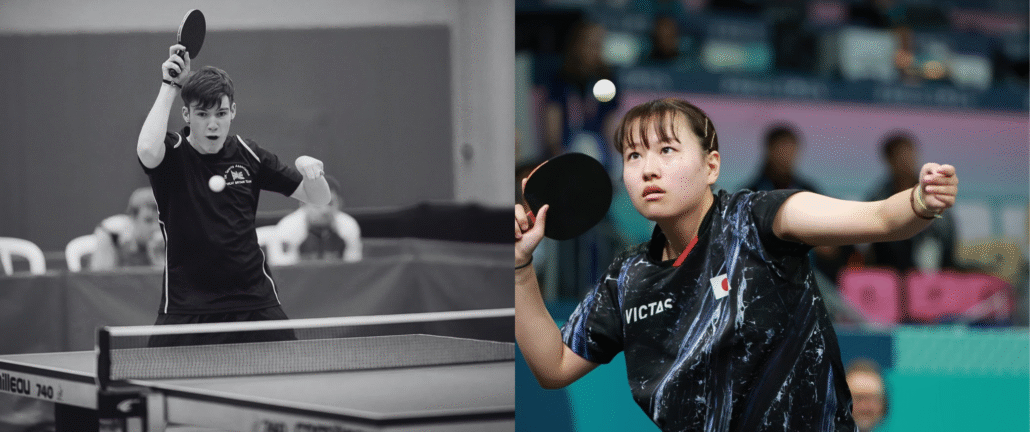
Three Decades of Smashes, Speed and Inclusion – The Story of Virtus Table Tennis
Table tennis is one of the world’s most widely played sports, demanding exceptional speed, concentration, coordination and tactical awareness. Within Virtus, it has become one of the organisation’s popular sports, bringing together athletes from around the world to compete at regional championships, World Championships and the Global Games.
Fast, highly technical and fiercely competitive, table tennis has played a vital role in expanding opportunities for athletes with an intellectual disability across both the Virtus and Paralympic movements.
Growth and International Competitions
The first Virtus World Table Tennis Championship for athletes with an intellectual disability was held in Belgium in 1995. Since then, Virtus has hosted eight World Championships, alongside numerous regional championships and competitions at every edition of the Virtus Global Games, creating a strong international pathway for athletes with an intellectual disability.
One of the defining strengths of Virtus Table Tennis is that competitions are conducted under the rules and regulations of the International Table Tennis Federation (ITTF)., with no adapted rules for athletes with an intellectual disability. This reflects the high technical standard of the sport and ensures athletes compete within internationally recognised competition frameworks.
At Virtus events, athletes compete in Singles, Doubles, Mixed Doubles and Team competitions, showcasing both individual excellence and teamwork at the highest level.
Virtus manages the eligibility process for athletes with an intellectual impairment wishing to compete internationally, ensuring fair and credible competition pathways across both Virtus and Paralympic events.
A Paralympic Pathway
Table tennis holds a unique place within the Paralympic Movement. Following its Paralympic debut at Sydney 2000, it became one of only a few sports currently open to athletes with an intellectual impairment, with II1 athletes competing internationally in Class 11.
The inclusion of Class 11 has created life-changing opportunities for athletes to compete on the world’s biggest sporting stage while increasing the visibility and recognition of the wider Virtus movement.
The 2023 Virtus Global Games marked another historic milestone, serving as the qualification event for the Paris 2024 Paralympic Games for II1 athletes. Acer Ebru (TUR) and Chen Po-Yen (TPE) secured their “golden ticket” to Paris by winning the II1 titles in Vichy.
Virtus continues to oversee the eligibility process for athletes with an intellectual impairment wishing to compete internationally, ensuring fair, credible and transparent competition pathways across both Virtus and Paralympic events.
Over the past four decades, Virtus Table Tennis has produced World champions, Paralympians and internationally respected athletes who have helped raise the profile of inclusive sport around the world.
Wada Natsuki (JPN), Kim Gi Tae (KOR), Chen-Po Yen (TPE), Acer Ebru (TUR), Elena Prokofeva (RUS), Sam Von Einem (AUS), Florian Acker (BEL), Lucas Créange (FRA), Thiago Gomes (BRA), Wong Ting Ting (HKG), Peter Pálos (HUN), Léa Ferney (FRA), Kanami Furukawa (JPN), Natalia Kosmina (UKR) and NG Mui Wui (HKG) are some of the athletes who have shined on the Paralympic podium in the II1/Class 11 category.
Following extensive research and development, the II2 class for athletes with an intellectual disability and significant additional impairments became a full medal event at the Brisbane 2019 Global Games, followed by the introduction of the II3 class for athletes with autism at the 2023 Virtus Global Games in Vichy, France.
Athletes including Rahma Khalid (II2), Joao Soldado Goncalves (II2), Jean Bachevillier (II2), Theo Clastres (II3), Thomas Sallier (II3) and Delhom Pierre (II3) have since become some of the leading names in II2 and II3 categories.
The sport’s growth mirrors the wider development of the Virtus movement itself – expanding opportunities, strengthening international participation and creating clear pathways for athletes to progress from national competitions to World Championships, the Global Games and the Paralympic stage.
From regional championships to the Paralympic Games, Virtus Table Tennis has become one of the strongest examples of high-performance inclusive sport.
Looking ahead
Beyond competition, table tennis helps athletes develop confidence, independence, discipline, leadership, emotional control and lifelong international friendships. Its fast-paced nature encourages concentration, quick decision-making and resilience, creating lasting benefits both on and off the table.
As Virtus celebrates its 40th anniversary, table tennis continues to grow as one of the organisation’s flagship sports. With eight World Championships already hosted and continued representation at the Paralympic Games, the future of Virtus Table Tennis has never looked stronger.
This remarkable journey has only been possible through the dedication of athletes, coaches, technical officials, volunteers, member organisations and the Virtus Table Tennis Committee, whose passion and commitment have shaped the programme over the past four decades.
Most importantly, the sport continues to demonstrate that athletes with an intellectual disability belong at the highest level of international competition – competing with skill, determination and pride while inspiring future generations around the world.
If you know someone with an intellectual disability or autism who would like to compete in the Virtus Table Tennis programme, encourage them to contact their national Virtus member organisation, apply for eligibility and begin their journey towards international competition – including the Virtus Global Games Cairo 2027.


