
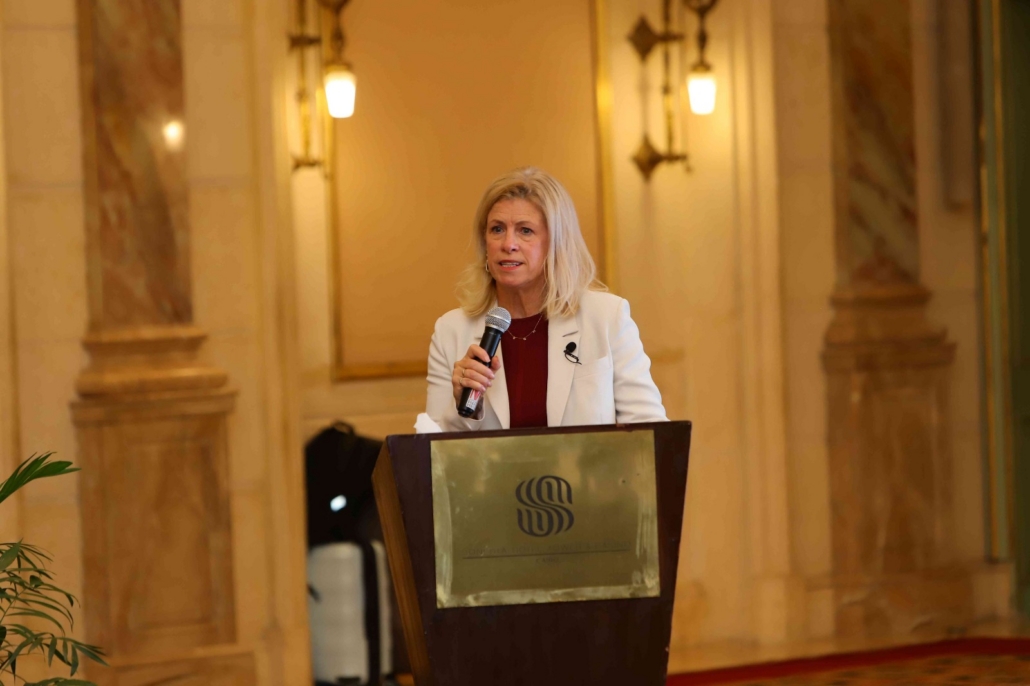
Robyn Smith OAM: Carrying Virtus’ Legacy Forward as its First Female President
For four decades, Virtus has been shaped by people who believed that athletes with an intellectual disability deserved more than the opportunity to participate. They deserved the chance to compete, to be recognised and respected, and to reach the highest level their ability could take them.
Few people embody that journey more closely than Robyn Smith OAM.
A leader in inclusive sport for more than four decades, Robyn has been part of the Virtus movement for much of its modern history. Her journey has been defined by a determination to challenge limitations, create opportunities and, above all, believe in what people can achieve.
In November 2025, she made history by becoming Virtus’ first female President.
Yet for Robyn, gender was never something she viewed as a barrier.
“My family never treated me differently because I was a female, so my gender never stopped me from doing anything. And Marie, too, led me that way. I’ve never lacked confidence, and my gender was irrelevant.”
That confidence was reinforced by her mentor, Marie Little.
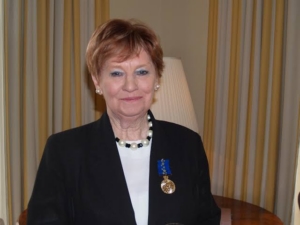 Marie was one of the founding figures of Virtus, a passionate advocate of sport for people with an intellectual disability, a pioneering figure in Australian intellectual impairment sport and one of Robyn’s most important mentors.
Becoming President of Virtus was not an ambition Robyn had carried throughout her career.
“When I first started working in Virtus more than 30 years ago, becoming President was not really my ambition. But when the opportunity came, I really wanted to do it.”
Now, she recognises the significance of the moment not only for herself, but for those who will follow.
“For me, it’s a legacy that no one can take away. I’ll always be the first female President. Hopefully, other females look on and think anything is possible”
And that legacy is about more than being first. It is about showing others what is possible. For Robyn, the historic significance of her presidency is therefore not simply the breaking of a barrier. It is the opening of a door – and an invitation for others to walk through it.
A career shaped by belief
Robyn’s connection with sport for people with an intellectual impairment began in Australia in the late 1980s, after an earlier career as an elite athlete and her training in physical education led her into sports administration. It would become, in her words, the “job of a lifetime”.
It was also where she met Marie Little, a pioneering figure in Australian in sport for people with an intellectual impairment who became one of Robyn’s most important mentors.
Marie’s philosophy was simple: focus on what a person can do, rather than what they cannot.
“She believed that a person was a person. And that sport, it should be all a focus on ability and what someone can do and not what they can’t do or any limitations,” Robyn recalls.
Marie also taught Robyn to speak up and challenge barriers. When Robyn considered withdrawing from a CEO application after discovering she was pregnant, Marie refused to accept that she should step aside because she was a woman and pregnant.
“Have the courage of your convictions, and never say I can’t”, Marie told her.
Changing perceptions through sport
Much of Robyn’s career has been about changing how athletes with an intellectual disability are perceived. Rather than trying to convince decision-makers through words, she would put athletes in front of them.
“They’d go, oh, this is just basketball. This is just cricket or this is just swimming or this is just athletics.
Once people saw the standard of competition, perceptions began to change. For Robyn, this is the power of sport.
“Athletes should not be viewed through charity or pity, but through their sporting ability and achievement. It’s not charity, and it’s not feeling sorry for people. It’s actually just appreciating the standard, giving them the opportunity they deserve.”
That belief remains central to her vision for Virtus.
Hosting 2019 Global Games and the Paralympic pathway
Robyn’s experience from hosting the 2019 Global Games in Brisbane reinforced her belief in the importance of major Virtus competitions. Despite the pressure of delivering a high-quality international event with limited resources, she looks back with pride.
“Global Games are much more than a competition. They provide a full programme of opportunities, including sports, different competition classes and disciplines that may not be part of the Paralympic Games. You have to see it to believe it. ” she explains, describing the Global Games as a showcase of what is possible and a catalyst for change.
Her vision also extends to the Paralympic movement. As a member of the IPC Governing Board and now President of Virtus, she continues to advocate for greater opportunities for athletes with an intellectual impairment.
When asked what it feels like to see these athletes compete at the Paralympics, her answer is simple: “I feel a little that it’s just fair.”
For Robyn, Paralympic inclusion is not the end goal. Virtus must continue developing strong competitions, working with International Federations, strengthening coaching and officiating, and creating credible pathways for athletes.
Looking towards the next 40 years
As Virtus celebrates 40 years, Robyn is already looking towards its 50th anniversary.
She wants to see a stronger organisation, with great governance, sustainable sponsorship and support, more member countries and greater global reach. She wants athletes with an intellectual impairment to have opportunities not only to compete, but to contribute to sport in other ways. And her vision is simple:
“They don’t always have to compete, as there is a place for them in sport always. I want to make sure that there are officials with an intellectual disability working in the Brisbane 2032 Paralympic Games. I want to make sure there are heaps of volunteers.”
That vision reflects how far Virtus has come – from creating opportunities for athletes to compete, to building a global sporting ecosystem where people with an intellectual impairment can find their place.
Robyn’s own journey has been shaped by people believing in other people. Marie believed in her. Robyn has spent her career believing in athletes. Now, as Virtus’ first female President, she is helping carry that belief into its next chapter.
Her message for the Virtus family on its 40th anniversary is fittingly simple:
“On Virtus’ 40th anniversary, I just want to thank you for what you do out there all around the world to help athletes with an intellectual impairment reach the best that they can be. Put athletes first, create opportunity and keep changing what people believe is possible.”

