

Virtus Partnerships: Building Pathways to New Opportunities
For 40 years, Virtus has created opportunities for athletes with an intellectual disability to compete, develop and excel in elite sport. While its own sport programmes remain at the heart of the organisation, partnerships with International Sport Federations have opened doors to new disciplines, strengthened competitive pathways and connected more athletes to the global sporting community.
These collaborations bring together Virtus’ expertise in intellectual impairment sport with the technical knowledge, competition structures and international reach of leading sport federations. Together, they are helping create more opportunities for athletes to compete, progress and perform on the world stage.
Today, Virtus has partnerships across Taekwondo, Karate, Golf, Sailing, Baseball and Softball, Tennis, Skiing and Hockey – each helping to build a more inclusive sporting landscape.
Taekwondo: From Poomsae to the World Stage
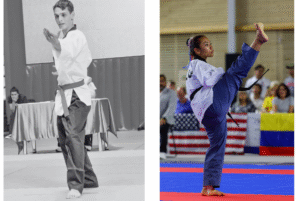
Para Taekwondo at GG2015 (left) and GG2023 (right). Photo Credit: SIA and Virtus
Para Taekwondo was among the first combat sports to become part of the Virtus programme, with Poomsae – a series of pre-arranged blocking, punching and kicking techniques – providing a competitive pathway for athletes with an intellectual impairment.
Virtus signed an MoU with World Taekwondo in 2013 in Lausanne, helping establish a stronger international pathway. Just one year later, Para Taekwondo Poomsae reached the 2014 World Para Taekwondo Championships in Moscow. Athletes with an intellectual impairment can compete across three categories: P21 (II1), P22 (II2) and P23 (II3) at the World Para Taekwondo Championships, with participation continuing to grow. The sport made its Global Games debut as a demonstration event in 2015 before becoming a full-medal event at the 2019 Global Games.
Athletes including Edison Joel Chiguano Aguilar (ECU), Junseo Bok (KOR), Juan Carlos Sanchez (USA), Jhormary Rojas Cordoba (COL), Chaeyon Seo (AUS), Kathryn Baxter (USA), Nicolas Velez Velasquez (COL), Joseph Sung-Joon Chun (USA), Michelle Cianciotto (ITA), Amanda Gregg (USA) and Joshua Wang (USA) have helped raise the profile of the sport.
Karate: Growing Para-Karate
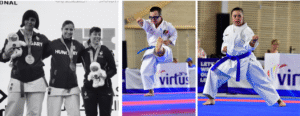
Athletes shining on the podium at the 2021 World Para-Karate Championship (left) and competing in the 2023 Virtus Global Games. Photo Credit: WKF and Virtus
Karate has become another important combat sport within the Virtus movement, with competition centred on Kata, meaning “form” in Japanese. Kata demands concentration, power, speed, balance, rhythm and control as athletes perform a series of precise techniques on an 8×8 metre non-slip mat.
Virtus and the World Karate Federation (WKF) formalised their partnership through an MoU in 2020, supporting the development of Para-Karate for athletes with an intellectual impairment. The 2021 World Para-Karate Championship in Dubai was the first Para-Karate event endorsed by Virtus, where athletes with an intellectual disability competed in the K21 and K22 categories. Since then, both classes have featured at every World Para-Karate Championship. Later, Karate made its Virtus Global Games debut at Vichy 2023.
Athletes such as Olivia Kakosy (HUN), Lucia Sanchez (ESP), Albert Singer (GER), Carlos Huertas Ruiz (ESP), Elise Reedijk (NED), Nadin Youssef (EGY), Mattia Allesina (ITA), Salma Alaaeldin Ebrahim (EGY) and Natalia Olson (CAN) are helping drive the sport forward.
Skiing: Working towards Paralympic Re-Inclusion
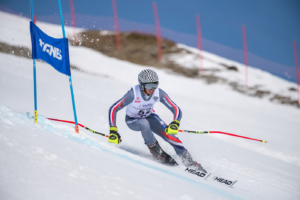
Skiing is one of the most popular winter sports and a discipline that combines endurance, courage, technical skill and determination against some of the world’s most demanding environments.
Virtus has been organising Skiing championships since 2003 following FIS rules. The partnership between Virtus and the International Ski and Snowboard Federation (FIS) was established in 2025 to strengthen collaboration and promote greater inclusion in winter sports. The agreement established a pathway for closer technical cooperation and aims to support the inclusion of athletes with an intellectual disability in Alpine and Cross-Country skiing at the highest levels of competition, including the Winter Paralympic Games, potentially as early as 2030.
Golf: Creating More Opportunities
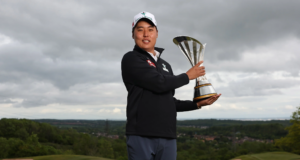
Simon Seungmin Lee from the Republic of Korea won the 2026 G4D Open on the final hole at Celtic Mano. Photo Credit: R&A
Golf offers athletes with an intellectual impairment another pathway into international competition, combining participation, skill development and high-performance opportunities.
In 2019, Virtus partnered with the European Disabled Golf Association (EDGA) to grow the sport and increase competitive opportunities for players with an intellectual impairment.
EDGA competitions provide two categories: IN1, covering players within the Virtus II1 and II2 pathways who meet the relevant criteria, and IN2, for athletes in the Virtus II3 autism pathway who do not meet the intellectual disability criteria.
Simon Seungmin Lee (KOR), Thomas Colombel (FRA), Natasha Stasiuk (CAN) and Michelle Lau (GBR) are among the athletes helping to raise the profile of inclusive golf internationally.
Hockey: Growing the Global Game
Virtus’ partnership with the International Hockey Federation (FIH), established in 2016, aims to build a sustainable international pathway for athletes with an intellectual impairment.
The collaboration supports the development of Para-Hockey through areas including governance, regulations, administration, classification, anti-doping and athlete development. With FIH’s global network of National Associations and Virtus’ international membership, the partnership provides a strong foundation for expanding opportunities through continental competitions, World Cups and, ultimately, the potential inclusion of athletes with an intellectual impairment in future Paralympic competition.
Athletes with an intellectual disability can compete in the Hockey ID format, developed by FIH and specifically designed for players with ID. FIH hosted the first-ever Para Hockey World Cup this year in the Netherlands and Belgium, where Italy emerged as champions.
Although Hockey is yet to make a debut at the Virtus competition, the FIH-run Para Hockey World Cup is providing opportunities for athletes to compete on the world stage.
Sailing: Sport for Life
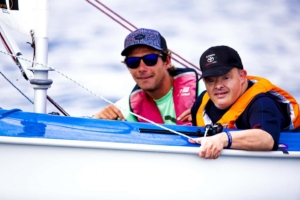
Sailing offers something unique: a sport that can begin as recreational participation and develop into a high-performance pathway.
Virtus signed an MoU with World Sailing in 2019 to expand opportunities for sailors with an intellectual impairment. Athletes can compete in the ILCA 6 class, with Para Sailing making its Virtus competition debut at the 2022 OA Games in Brisbane, Australia. World Sailing initiated Para Inclusive Sailing a few years ago and organised its inaugural World Sailing Inclusive Championships last year. More information on Para Inclusive Sailing can be found here.
Athletes including Caleb Evans (NZ), Allister Peek (AUS), Margaret Sanderson (AUS), Nathaniel Quan (AUS), Tyler Dodson (USA), Steve Comen (AUS), Peter Richardson (AUS) and Neil Rowsthorn (AUS) are some of the champions from the 2022 Virtus OA Games, who are raising the standard of the sport for athletes with an intellectual disability.
Baseball and Softball: Building a New Pathway
Baseball and Softball are among the newest sports to join the Virtus programme, creating another opportunity for athletes with an intellectual impairment to enter the international sporting arena.
In December 2022, Virtus signed an MoU with the World Baseball Softball Confederation (WBSC) to develop opportunities across baseball and softball.
The agreement supports the introduction of an intellectual impairment class at WBSC competitions where possible, including World, Regional and National events.
Baseball5 for athletes with an intellectual impairment was also identified as a priority within the WBSC Paralympic Commission’s 2022–2028 Strategic Plan, creating the potential for an important new pathway in the years ahead.
Tennis – Growing Tennis at International Stage
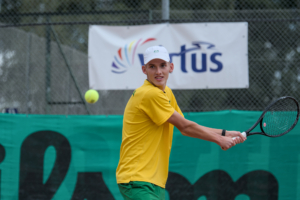
Hunter Thompson at the Annecy 2024 Virtus World Tennis Championships. Photo Credit: FFSA
Tennis demands precision, speed, strategy and mental resilience – qualities that are on full display across the Virtus competition programme, which includes Singles, Doubles, Mixed Doubles, and Men’s and Women’s team events.
The growth of Virtus Tennis has been strengthened through a longstanding relationship with World Tennis (International Tennis Federation-ITF), with the two organisations formally signing a Memorandum of Understanding (MoU) in December 2025. The agreement marked another important milestone in the development of tennis for athletes with an intellectual impairment, strengthening collaboration and creating further opportunities for the sport to grow internationally.
From a programme that began with athletes from just three nations, Virtus Tennis has evolved into an expanding global pathway, connecting athletes from around the world through high-level competition and international opportunities.
That growth is reflected in the athletes who have helped shape the programme. Multiple-time World title winners and leading international players, including Archie Graham (AUS), Kelly Wren (AUS), Dominic Iannotti (GBR), Eva Blanc (FRA), Hanne Lavreysen (BEL), Timothy Gould (AUS), Emanuelle Bezzi (ITA), Hugo Beckmann (FRA), Hayden Ballard (AUS), Hunter Thompson (AUS) and Youen Segre (FRA) have all left their mark on Virtus Tennis.
Together, the partnership, the growing international pathway and the achievements of its athletes demonstrate how Virtus Tennis continues to build a stronger and more inclusive future for the sport.
Opening Doors Through Partnership
Virtus partnerships are about more than adding sports to a programme. They are about opening pathways for athletes with an intellectual disability.
By working with international federations, Virtus is helping athletes with an intellectual impairment access new sports, compete under recognised international structures and move closer to the highest levels of competition.
These partnerships also demonstrate what can happen when organisations combine expertise, resources and a shared commitment to inclusion. From the mat and the golf course to the sailing water, hockey pitch and baseball diamond, new opportunities are continuing to emerge.
As Virtus marks 40 years, these collaborations are an important part of its legacy – and a powerful indication of what the next 40 years can bring.
If you know someone with an intellectual disability or autism who would like to compete in these sports, encourage them to contact their national Virtus member organisation, apply for eligibility and begin their journey towards international competition.


